You’ve probably heard of the term “double wall oven” thrown around, especially if you’re searching for kitchen remodeling ideas or browsing through the showrooms of appliances. It’s not an inexpensive purchase, and definitely takes up more cabinet space than a conventional oven. If you’ve ever attempted to roast the bird and bake pie within the same oven at Thanksgiving, juggling racks and timers with temperatures that do not coincide, you’re probably aware of the reasons why some are adamant about having two ovens rather than one.
Let’s look at the features of a double wall oven, what it is in reality, how it compares against other types of ovens, what you can expect to spend, and which models merit your consideration this year.
So What Exactly Is a Double Wall Oven?
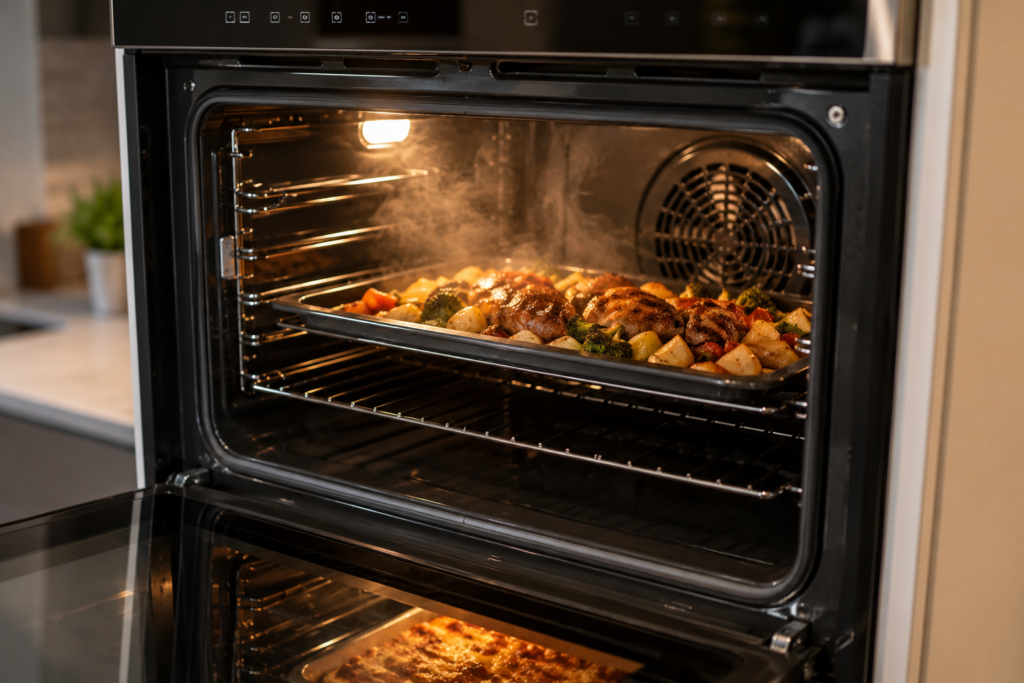
In short, a double wall oven gives you two ovens’ worth of flexibility in one footprint. It’s two ovens in one unit, tucked into the wall or cabinetry instead of being placed on the floor as a traditional range. Each oven operates independently with different temperatures, various timers, and operating simultaneously without interfering. Roast a chicken on high, then bake cookies below. There’s no need to fight for oven space anymore. Also, you’re no longer constantly shutting and opening the same door and losing the heat each time.
Since they’re set in the air — with the bottom oven set at counter-height and the top one at eye level or higher, it means you don’t have to crouch down each time you look at your food, which is not a big deal when you’re doing this all day for a long time. Anyone suffering from knee or back problems will be able to notice the difference quickly after switching to a double oven.
Double Wall Oven vs. Single Wall Oven vs. Double-Oven Range
The truth is, these three categories are confused all the time, and it’s time to clear the confusion once and for all. Choosing the wrong one could mean the kitchen being redesigned halfway through.Here’s how a double wall oven compares to a single wall oven and a double-oven range:
| Feature | Single Wall Oven | Double Wall Oven | Double-Oven Range |
| Cavities | 1 | 2 (usually identical size) | 2 (usually a different size) |
| Cooktop is included | No | No | Yes |
| Capacity typical | 2-4 cu ft | 5-10 cu ft combined | ~6 cu ft combined |
| Installation | Wall/cabinet | Wall/cabinet (taller cutout) | Floor |
| Best for | Small families, small spaces | Frequent entertainers, large families | Space-savers who want to have an array |
| Approx. cost | $1,200 to $3000 | $2,500–$6,000+ | $1,800–$4,500 |
A quick summary
A double wall oven typically provides two identical spaces and no cooktop; however, a double oven range squeezes two ovens of different sizes and a cooktop into a single floor unit. If you’re already thinking of having a separate cooktop, perhaps one that’s gas or induction, installed in your counter or island, it’s a good idea to go with a wall oven. It is the best option since you’re not buying a cooktop that you don’t require. There’s no shortage of double wall oven options on the market right now.
However, in the event that your kitchen layout is cramped and there’s no available wall space needed for a built-in unit, the double oven range allows you to make use of two ovens without asking for more than your current dimensions of the range.A double wall oven simply makes multi-dish cooking less stressful.
Gas or Electric
It all comes down to the kitchen you already have running, and the amount you’re willing to pay for new work. When choosing a double wall oven, this decision really comes down to.
Electric wall ovens require a 240-volt outlet, and their temperature tends to remain consistent because the element runs more often, which is important for bakers who frequent the oven and are concerned about browning. The gas ovens, on the contrary, require a gas line specifically installed by a licensed professional (not something you can DIY complete stop). They also heat faster and maintain an increased amount of water in your cooking area that certain dishes like bread, roasts, or certain desserts truly benefit from.
There’s also a cost-saving angle in this. Installing a new gas line to a wall oven in particular, particularly if there wasn’t one before, could be a significant portion of your overall project costs.If there’s not a gas line running to the location inside your kitchen, electricity is usually the most convenient and less expensive option, and for the majority of cooks at home it’s not significant enough to justify the additional installation cost.
What Size Do You Actually Need?
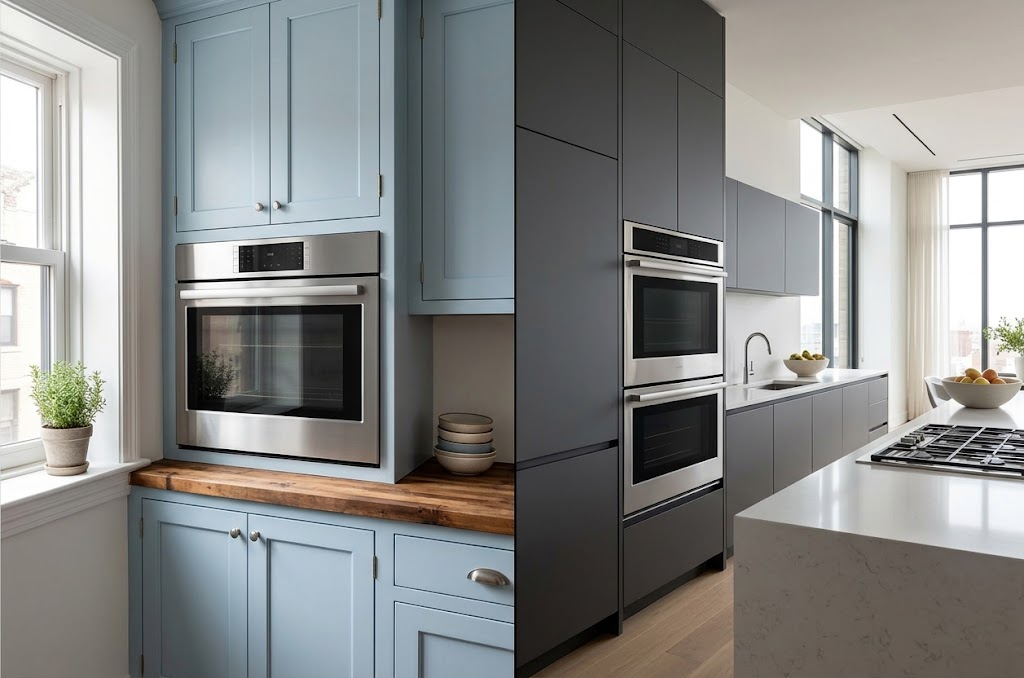
Double wall ovens can be generally made available in three dimensions: most common dimensions include the following: 24 “, 27”, and 30 inches. The difference is more than you would be able to consider when looking at the potential of each.Picking the right double wall oven size starts with measuring your cabinet space.
| Width | Outer Height (approx.) | Cutout Height | Total Capacity |
| 24″ | 48-50″ | 48.5-49.5″ | 5-6 cu ft |
| 27″ | 48-52″ | 48.5-50.5″ | 6-8 cu ft |
| 30″ | 48-52″ | 48.5-50.5″ | 8-10 cu ft |
When you are ready to be awestruck by the cabinet you see on the internet, take measurements of the space within the cabinet. Measure the width, depth (usually between 24 and 26”), and, most importantly, the height because these units are significantly higher than single ovens. Consult an expert to verify the cutout, too. It’s not a good idea to discover during installation that the cutout is one inch too small, or that the model you selected requires special cabinetry that you didn’t plan for.
If you frequently cook for a large group (large family or frequent guests opting for the “30” option offers you significantly more space in both cavities and is more important than most people think when trying to accommodate more sheet pans or a large roasting pan simultaneously.
Best Double Wall Oven Models for 2026
There’s no shortage of double wall oven options on the market right now.Now that you know what a double wall oven costs and needs, here are the double wall oven models worth considering in 2026.
1.GE Profile PTS9000SNSS
Ten cubic ft. combined, featuring true convection in the two cavities. WiFi and control buttons that can be touched. A great, balanced option for those who aren’t certain what they’re looking to find. It is able to do it all without bogging users down with features that you won’t even use.
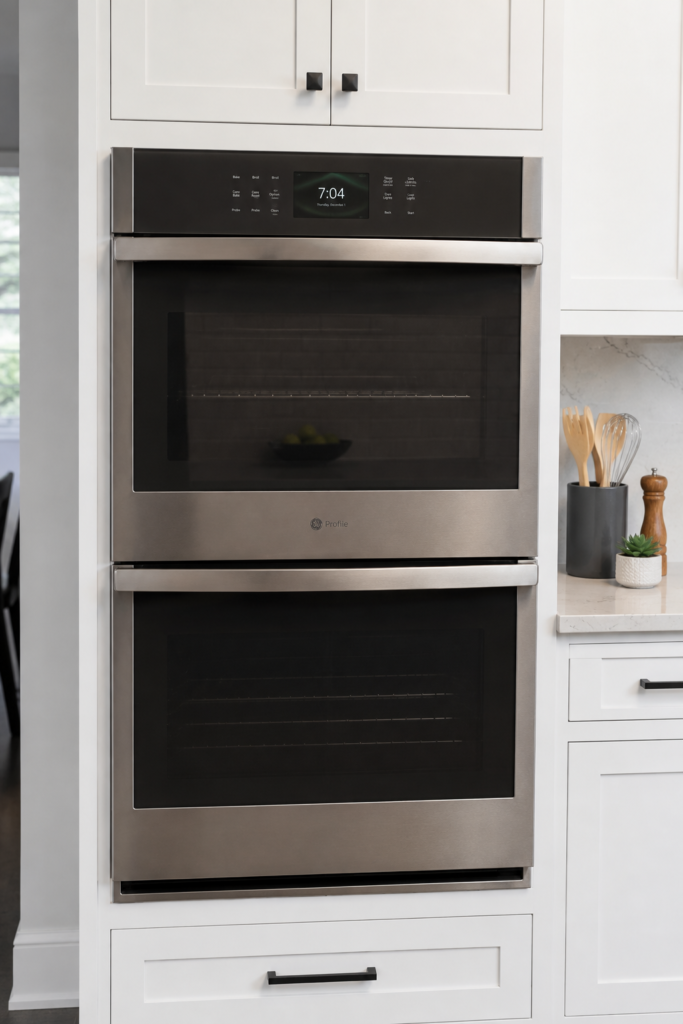
2.KitchenAid KODE500ESS
A similar capacity, 10 cubic feet convection that is even-heat as well as temperature sensors for the two ovens. It’s perfect for people who prefer to have control of all aspects instead of using presets. This program recognizes cooks who are able to cook.
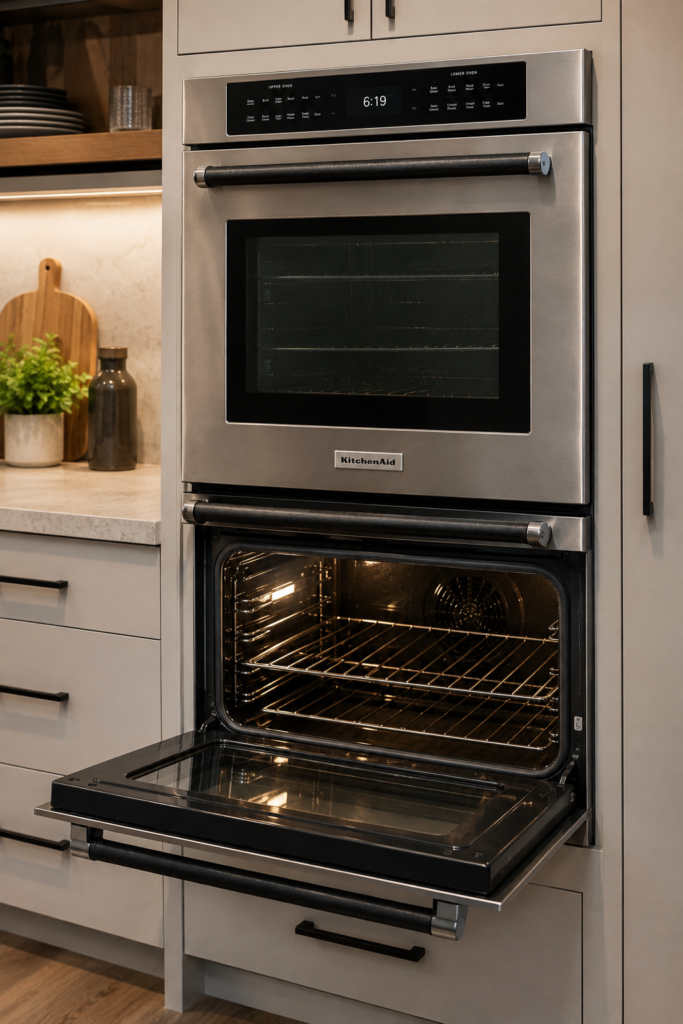
3.Samsung NV51K6650DG
Dual convection that bakes evenly, a fingerprint-resistant finish, and touch controls that look right at home in a modern kitchen. It’s also a great option for those who already have additional Samsung smart appliances for their home and wish for them to operate similarly using the same application.
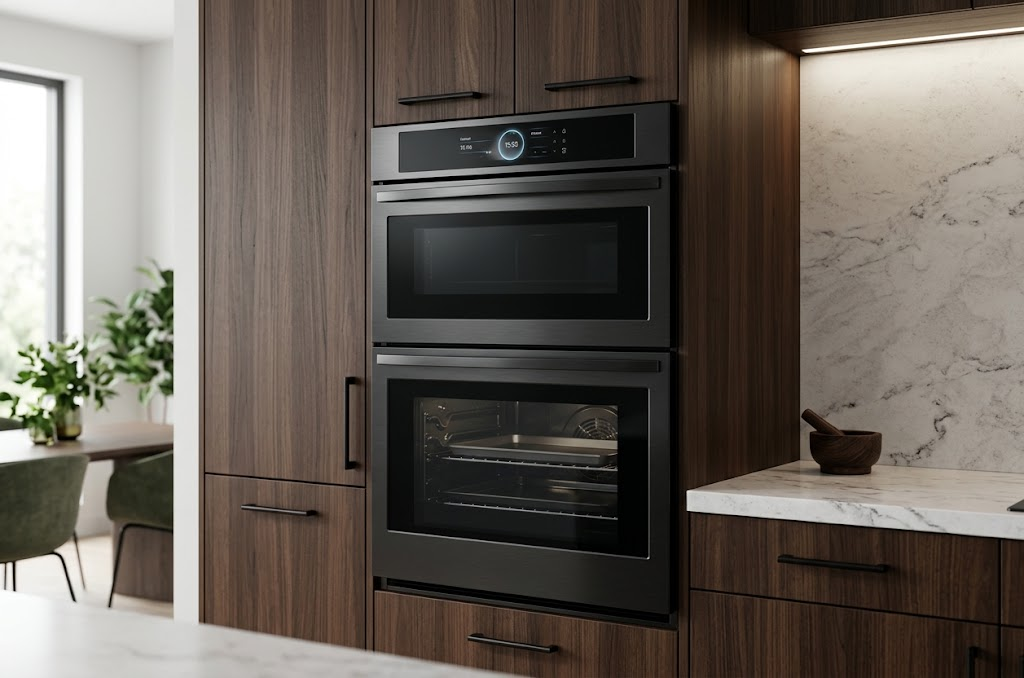
4.Whirlpool WOD77EC0HS
Whirlpool is the top-selling appliance brand across the US because it’s reliable and doesn’t require a high-end budget. It’s not extravagant, but it gets the basics well, which is what most people require.
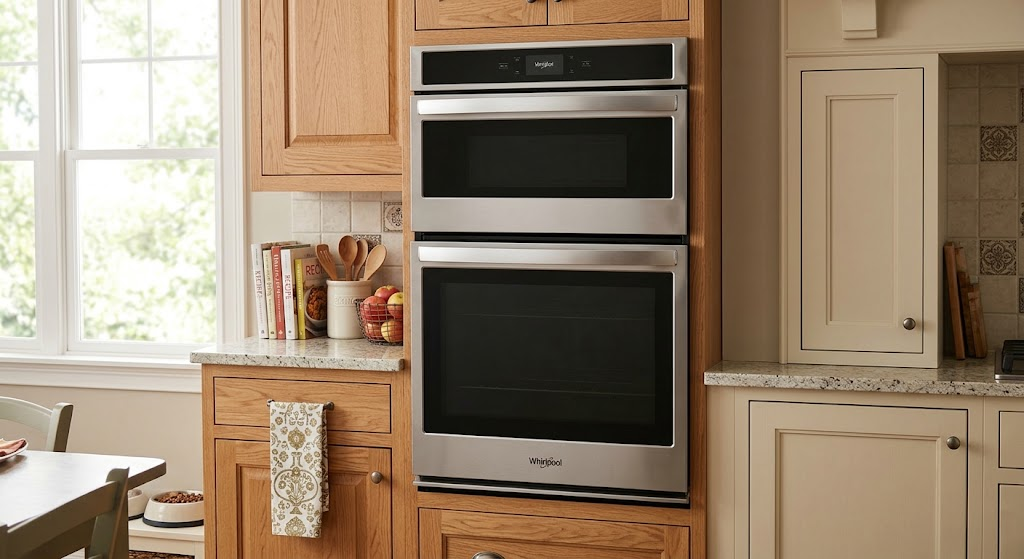
5.Frigidaire Gallery FCWD3027AS
Convection is solid and has good capacity, without the expensive cost. An excellent choice if price is more important than the bells and whistles and you’d rather use the money saved towards installation costs.
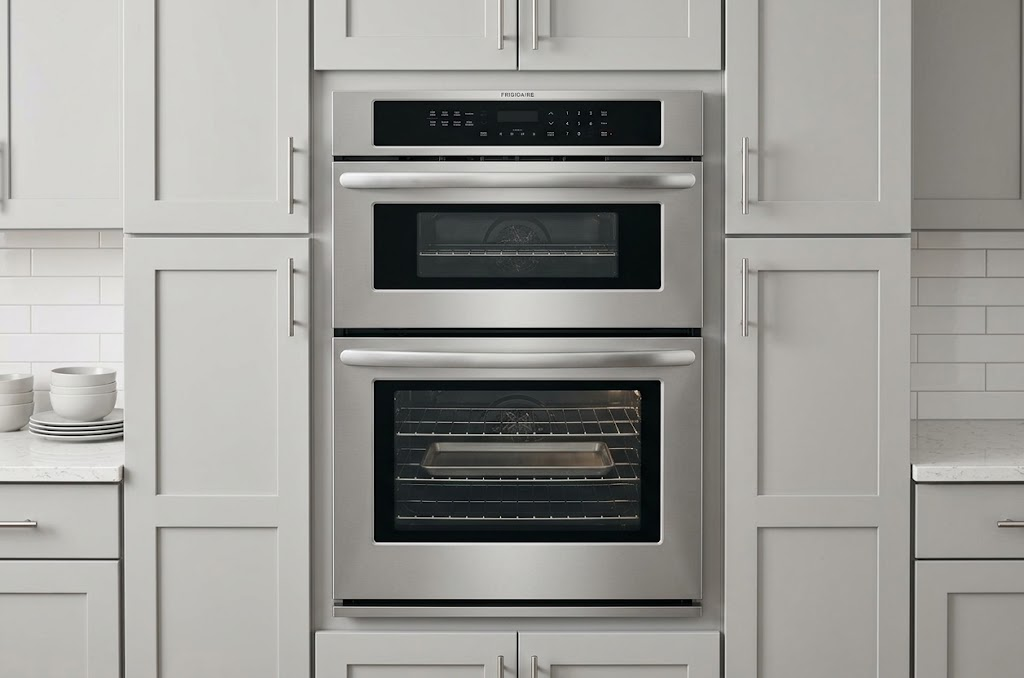
6.ZLINE Autograph Edition WADZ-30
This product is designed for the discerning buyer who wants chrome-plated hardware authentic convection air fryer, as well as self-cleaning. The style is as stunning as the food it cooks in and is a stunning centerpiece in kitchens with distinct styles.
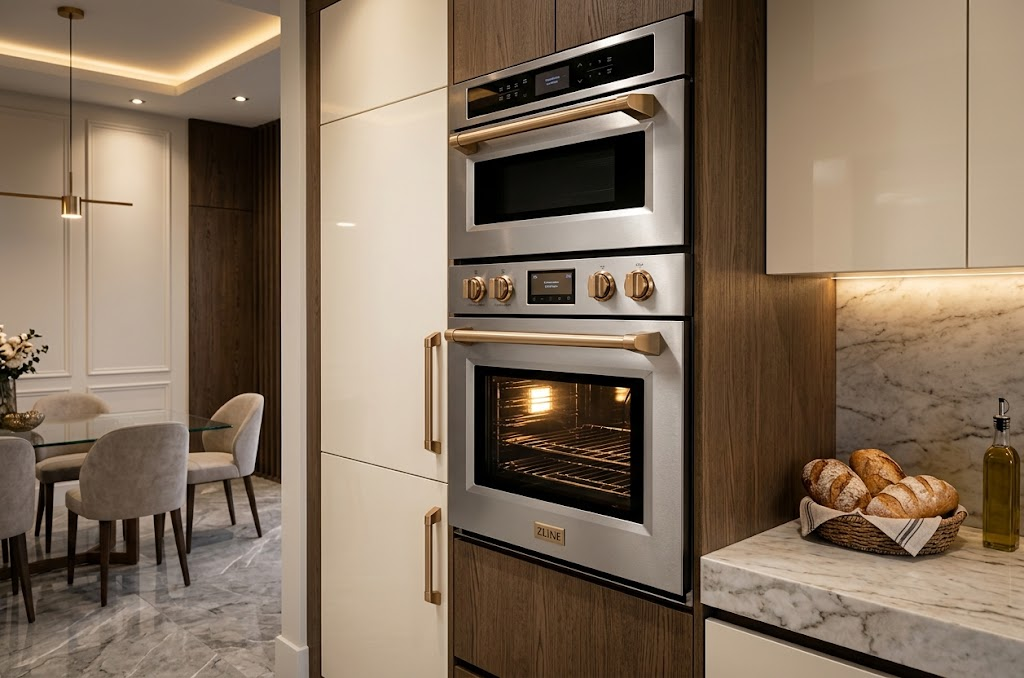
7.LG Smart Double Wall Oven
InstaView window to ensure you’re not opening the doors to check your food and losing heat each time, steam assist, air fry, as well as smart connection. Many technological features are packed inside for those who would like their oven to be contemporary.
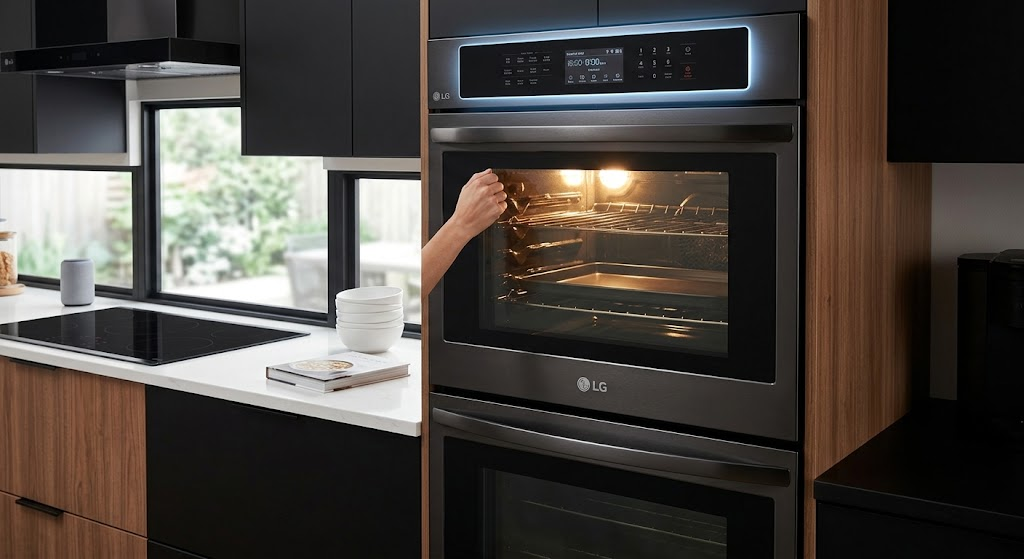
Any of these double wall oven models will serve you well depending on your budget and priorities. For independent lab testing and reliability ratings, Consumer Reports wall oven guide is a solid reference point.
Quick Comparison
| Model | Capacity | Convection | Smart Features | Approx. Price |
GE Profile PTS9000SNSS | 10 cu ft | True convection | WiFi | $4,500-$5,200 |
| KitchenAid KODE500ESS | 10 cu ft | Even-Heat True Convection | Limited | $4,200-$4,700 |
| Samsung LG | 10.2 cu ft | Dual convection | smart connectivity | from $3,800 to $4,400 |
| Whirlpool WOD77EC0HS | 10 cu ft | True convection | Basic | $2,800-$3,400 |
| Frigidaire Gallery FCWD3027AS | 9.2 cu ft | Convection | Basic | $2,500-$3,000 |
| ZLINE Autograph WADZ-30 | 9.4 cu ft | True convection + air fry | Basic | $4,800-$5,500 |
| LG Smart Double Wall Oven | 9.6 cu ft | Convection + steam | WiFi, InstaView | $3,900-$4,600 |
Whichever double wall oven you pick from this list, all seven are solid, tested options.
What’s This Actually Going to Cost You?
- The price on the sticker is only part of the equation. This is the reason why many people underestimate their budget. Prices for budget models start at about $2,500. If you opt for a higher-end model, then you’ll be looking at an additional $6,000 for the appliance.
- There’s also the installation cost — usually between $500 and $1,500 or more, when an electrician has to create a new circuit or a plumber has to set up gas lines starting from scratch. When your home is renovated from scratch, it’s possible to incorporate this expense in a more efficient way into the overall cost. If you’re retrofitting an existing kitchen, you should consider the need for cabinet modifications, as not all cabinet openings can allow for two wall ovens without some work on the carpentry.
- Request a few estimates before making a decision, and make sure you ask about gas or electrical work that is done upfront. These are the areas where surprise costs often are hidden. The appliance cost is simple to budget, but the work and utilities usually frighten people. Budget accordingly, and your double wall oven purchase won’t come with surprises.
Installing One Isn’t a Quick Job
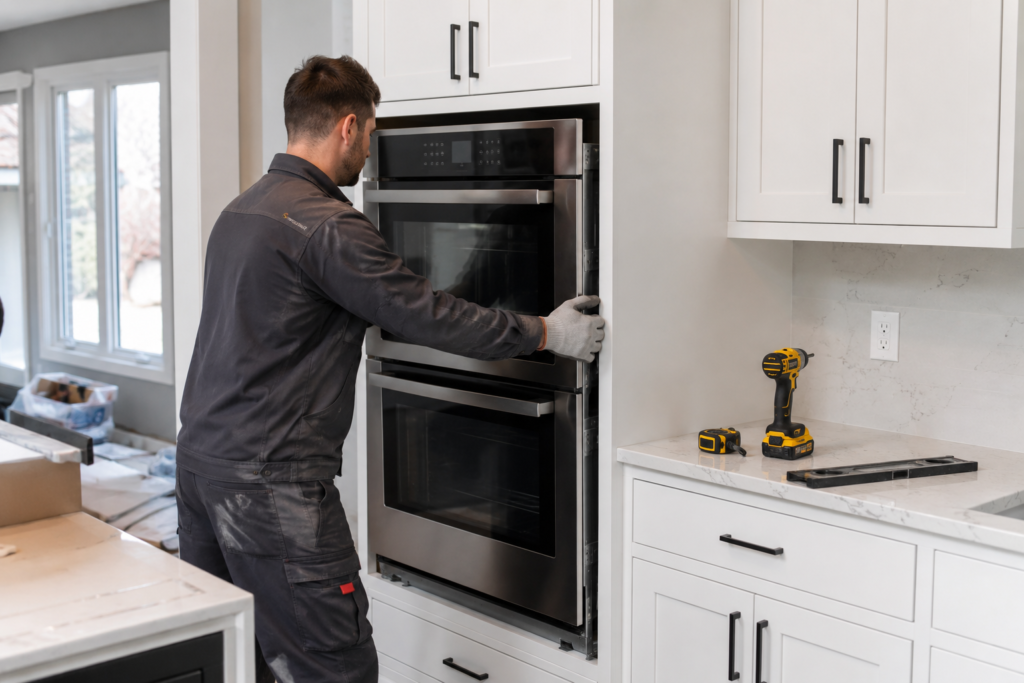
Installing a double wall oven is more involved than.This is a much more complex installation than switching out one oven for a single one, so here are the things to be prepared for when installing:
- Electrical: Electrical models require a dedicated 240-volt circuit, and the installation of a new one could require approval from the municipal building inspector.
- The gas line:If you’re planning to go for gas, then this is an occupation for licensed professionals. Do not take shortcuts. Incorrectly installed gas lines pose a real danger to your safety.
- Clearance:Manufacturers designate spaces between cavities on the sides and over the top to allow heat to escape efficiently. If you do not follow this, you could risk overheating your electronic devices and reducing the lifespan of your device, or even voiding the warranty.
- Cutting-out size: The most serious mistake people make is not knowing the height. Always check before buying because this is the measurement that causes the majority of issues for first-time buyers.
- Door clearance: Doors need enough room to fully open without hitting an adjacent cabinet, island, or appliance handle.
If you think any of these sounds like an excessive amount, you should consider hiring a kitchen designer or installer to visit your home before you make a decision on a layout, particularly for an older house where the dimensions of cabinets may not meet the current standard. If you’re also comparing this against a combo microwave-oven unit, keep ventilation clearance in mind there too. A properly installed double wall oven should give you years of trouble-free cooking.
Why People Actually Love a Double Wall Oven
There’s a reason a double wall oven shows up on so many remodel wish lists:
- Two temperatures at the same time can be a lifesaver during large meals and celebrations.
- Do not have to bend down to look for food.
- Two different dishes to cook without one of them absorbing the aroma or the moisture of the other.
- Make room on your counter to have the cooking area of a dedicated stove.
- The latest models are loaded with convection, smart functions, and even self-cleaning.
- Backup capacity is required if one of the cavities is being used for something long and slow, for example, roasting low and slow.
When a Single Oven Still Makes More Sense
- If you’re the only one, or you cook only a couple of times a week instead of every day, and you don’t have a large kitchen, a double wall oven could be a bit overkill. A single oven is more affordable, takes up less space, and does what it is supposed to do for cooking most of the time. It’s also easier to avoid going wrong in terms of maintenance with just one oven instead of two.A double wall oven might genuinely be overkill for your kitchen.
- Do not use the double option for households who are constantly juggling several dishes, hosting frequently, or cooking for a large number of people — and that’s the place where the cost of installation and effort actually pay for itself.
FAQs
1.What is a double-walled oven?
Two cooking chambers are separated inside the wall cabinet, each with its own independent operation and their individual temperature.
2.What is the distinction between a range with two ovens and two?
The double-wall oven is fitted with two ovens that are the same, and the cooktop. A double oven range comes with two different ovens and an additional cooktop that sits in the middle of your floor.
3.What is the price of a double wall oven set you back?
The price is typically between $2,500 and $6,000+ for the appliance, with $500-$1,500 to install.
4.Does it require outside venting?
The majority of them vent internally through the lower part inside the doors. Make sure that there is adequate clearance inside the unit.
5.How tall of a cabinet will I require?
Typically, between 48-52 inches, based upon the type of model. Always read the specifications sheets of the manufacturer prior to making an purchase.
6.Electric or gas- which one should I buy?
If you don’t have a gas line, you should consider electric. It’s less complicated and more affordable. Gas heats up faster and provides moisture, which bakers like, but it’s more of a commitment to installation.
Conclusion
The double-wall oven can make sense if you cook often, host a lot, or are simply tired of playing Tetris using just one oven and several dishes. It’s more expensive, and it’s not something you can tackle in the afternoon or evening, but in a well-equipped kitchen, it can keep meals for the duration. If you cook on your own at night, a small oven can do the job at a fraction of the cost and effort.Whatever you choose, the best oven for you: take measurements and determine the requirements for installation prior to your purchase, this is the one that can save you the most headaches in the future.
A properly installed oven should give you years of trouble-free cooking.