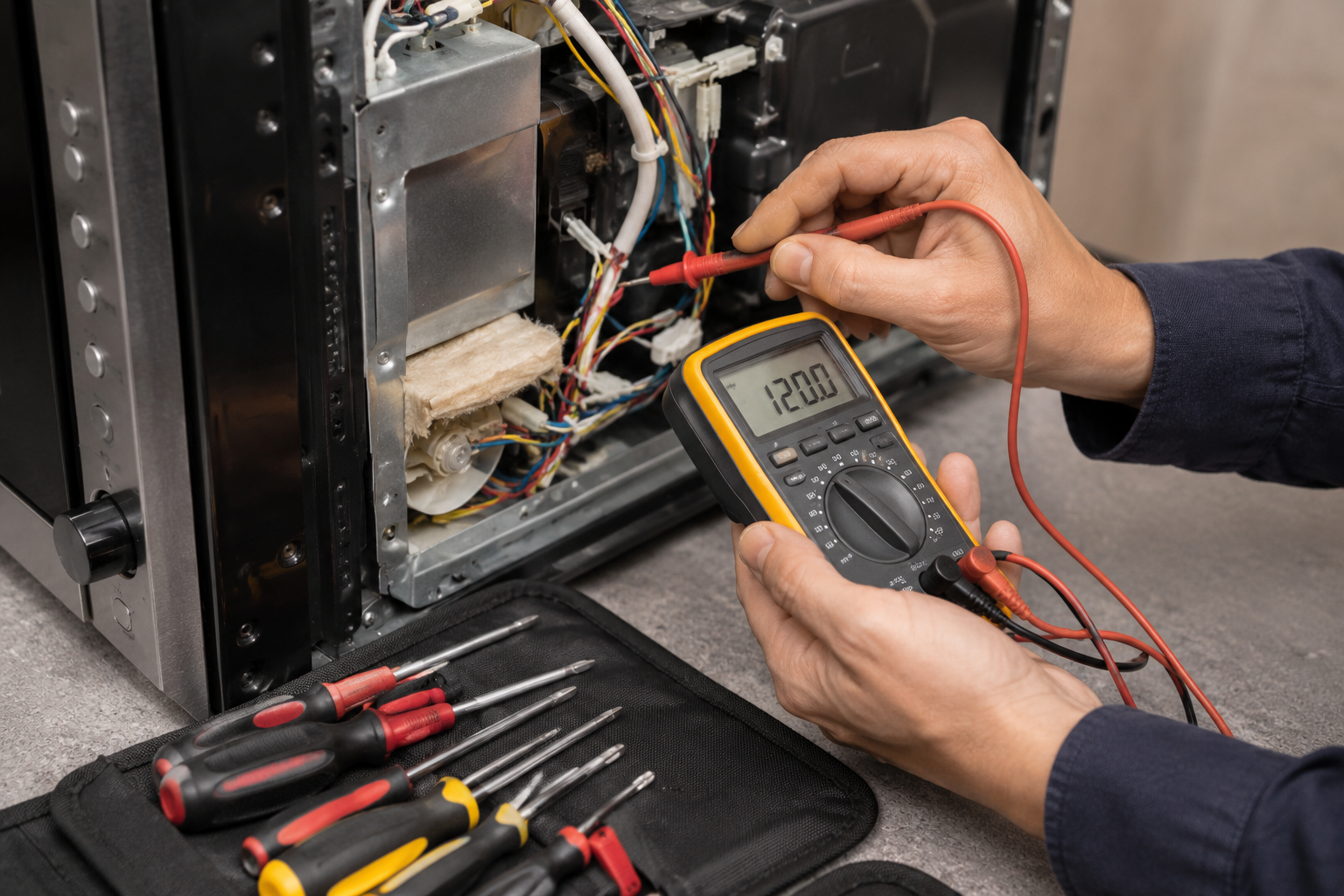
Fixing common gas oven problem issues doesn’t have to mean an expensive service call — most cases come down to a handful of repeat offenders, and are fixable in under thirty minutes with tools you already own. A gas oven that won’t heat, clicks without lighting, or smells faintly of gas can otherwise turn dinner into a scramble.
This guide outlines some of the more frequent fixing common gas oven problem with gas ovens such as these, which typically require patience and the correct first step. Fixing common gas oven problem issues correctly can help you avoid unnecessary repair costs.A word of caution: If you smell gas that isn’t gone in two minutes, turn the oven off, and don’t use any appliances or switches; air-condition the room, and contact your gas company or a licensed technician immediately. This is the sole reason that isn’t covered in every “try it yourself” tip in this article. Fixing common gas oven problems are given below:
Oven isn’t heating at all.
- The display comes on, and the oven is turned on; however, there’s no flame or heat. In about 90% of instances, it’s due to a malfunctioning igniter; it needs to draw enough current to get sufficiently hot to trigger the safety valve that lets out gas. The weaker igniter will show in a dull orange, not bright white-yellow, and does not get sufficiently hot to activate the valve. Fixing common gas oven problem cases like this begins by at the igniter through the oven’s glass when it is trying to heat up, and a tiny or barely visible glow is the sign that you’ve found the problem. They are a common component that is inexpensive and are among the most straightforward fixes for fixing common gas oven problem repairs in this entire list, and the majority of models can be replaced after you’ve found the correct model number on the plate that you’re rating.
- If the igniter is glowing well, but it doesn’t light, the gas valve could be at fault — that part of fixing common gas oven problem cases is a job for a technician, not a DIY task.
Burner Clicks But Won’t Light
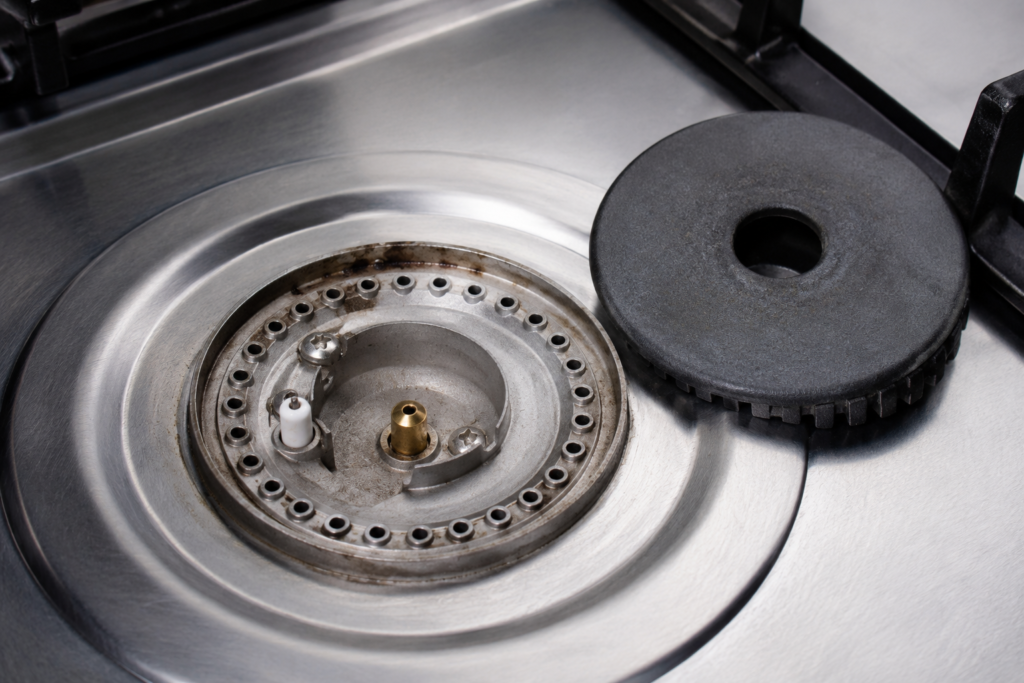
- The spark igniter clicks quickly, but the burner doesn’t light — which is usually a result of a moist or misaligned cap for the burner, blocked ports for burners, or residual moisture within the ignition assembly following cleaning. Fixing common gas oven problem cases, such as a sluggish burner, is as simple as removing the cap and grate, drying them completely, and then examining the food particles that block the tiny ports.
- Clean the ports gently using an easy brush or needle but don’t make them wider and then replace the cap in a position that is in a flush position. Even a little off-center cap will cause clicking, but without the ignition. If 1 burner suffers, the solution is specific to the burner. If each burner is affected but there’s no lighting, the reason is typically upstream -for example, a low gas supply, a pressure regulator, or the shared spark module. It’s worth calling to get assistance.
Gas Smell When The Oven Is Off
- A gas smell, either mild or strong, which appears regardless of whether the oven is in operation, is the only item on this list for which you need to put aside troubleshooting and take action. Most likely, the cause is an igniter that allows gas that isn’t burned to build up prior to it being caught, or more serious — the gas valve isn’t closing properly. Fixing common gas oven problem situations like this requires being aware of your limitations.
- If the smell isn’t too strong and is only evident after ignition, it’s unburned gas clearing; it’s worth watching and not being frightened about. If it continues to linger, becomes more intense or comes up without the oven shut and the gas supply, if you’re able to do so safely, and then ventilate your kitchen, then call your gas company or licensed technician right away.
- Don’t ever touch the gas valve on your own— that step of fixing common gas oven problem cases always belongs to a professional.
Unequal Heating (Hot spots and cold)
- Fixing common gas oven problem cases like uneven heat, can be solved by identifying the most common reasons first. The most obvious indication is that food is browning unevenly — in one part of the tray and raw on the opposite side. It usually goes back to a malfunctioning oven or broil ignition that is not working, a defective thermometer, blocked vents, or a faulty rack placement. Check for obvious obstructions to vents, as it’s the quickest test. It’s also possible to rotate the baking trays as you cook. is a good way to test for a temporary fix.
- If the issue occurs over multiple bakes, regardless of the rack’s position, the temperature sensor is the next to be considered, and testing it typically requires a multimeter. So it’s a good idea to provide it to a technician if you’re not comfortable testing electrically.
Oven Can’t reach the Temperature Set
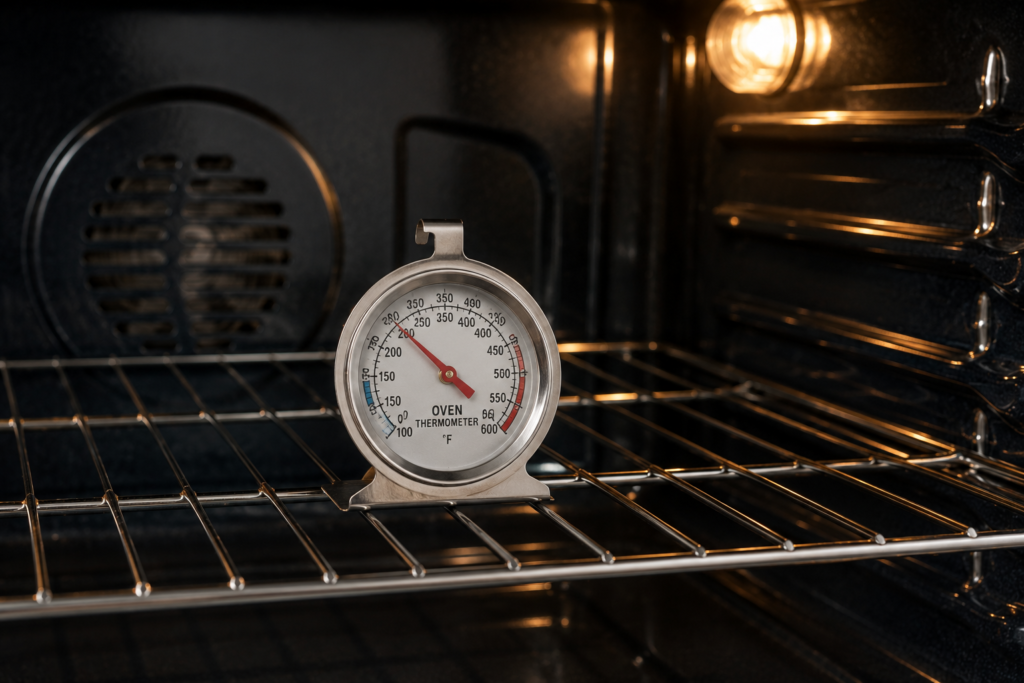
- The oven warms up, but it doesn’t quite reach or maintain the temperature you have decided to set. Most often, this is due to calibration drift, an old igniter that’s not able to close the gas valve as well as a temperature sensor that is feeding incorrect information into the controller board.
- Utilize an independent oven thermometer to measure the actual temperature against the one displayed on the. A gap of 15-25degF is normal and typically requires a calibration tweak within the settings menu of the oven; an even larger and more uncoordinated gap is a sign of the igniter or sensor instead.Fixing common gas oven problem cases like this one is usually a simple calibration tweak away.
Flame is Orange instead of Blue
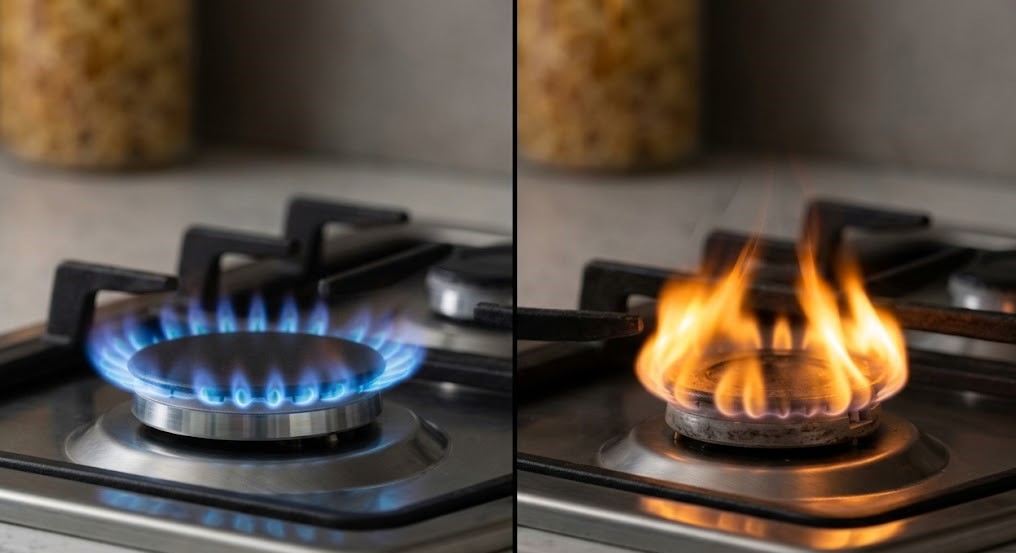
- The burner turns on; however, the flame turns either orange or yellow instead of a pure blue – the sign of incomplete combustion, which is usually caused by dirty equipment for the burner, the gas-to-air ratio is off, or obstructions to airflow. Fixing common gas oven problem cases where the flame turns orange starts by cleaning the burner and ports thoroughly. This will clear up many cases by itself.
- If the flame remains not in the right color after a thorough cleaning, the air shutter could be in need of adjustment. It’s important to do so immediately, since incomplete combustion will produce much more carbon monoxide than a well-burning blue flame.
Oven Door Doesn’t shut properly
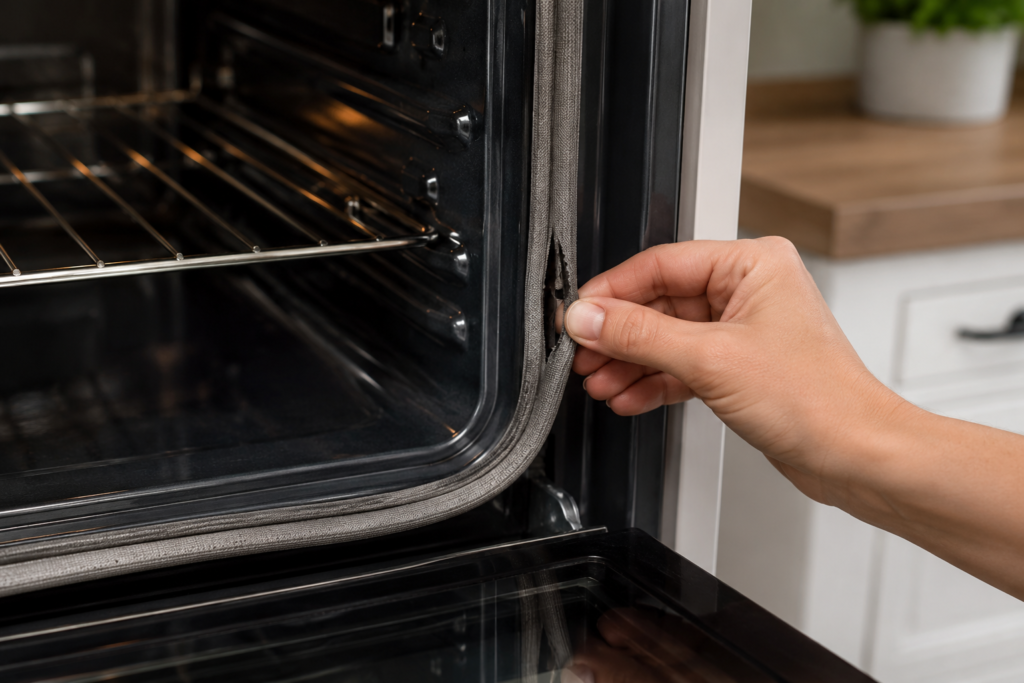
- The door isn’t sealing, or you feel heat escape around the edges; typically, a damaged or defective gasket for the door hinge that is worn out or damaged, or obstructions to the door’s closing route. Fixing common gas oven problems, such as a broken door seal, usually starts with the gasket. Look at the rubber seal surrounding the frame for cracks and warping, as well as flattening or warping; it’s the most typical problem and can be fixed with a simple fix.
- If the gasket appears to be in good condition and the hinges are in good condition, you can check them to see if they are damaged or loose.
Control Board or Display Moving Up
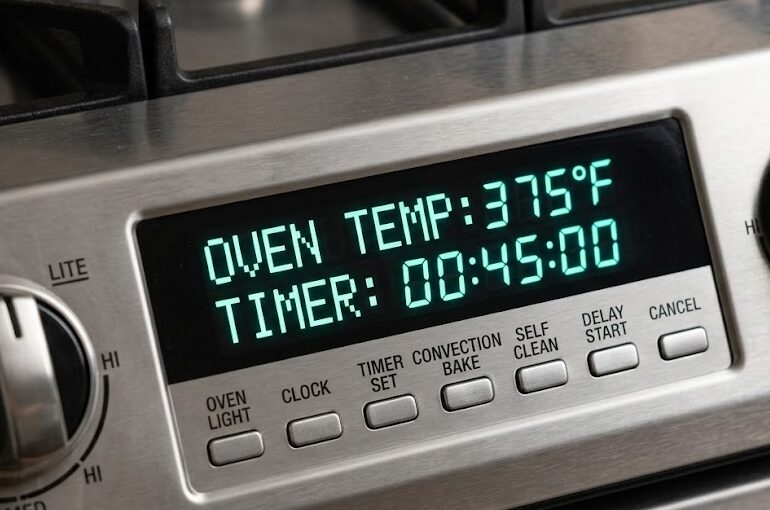
- Buttons aren’t responding, or the display is flickering, or the settings alter independently. Control boards could fail due to the effects of voltage surges, age, or even water getting in as time passes. Fixing common gas oven problem cases on the control board typically involves a full power cycle.
- You must cut power to the outlet or breakers for a short period of time before restarting it. This will resolve a number of cases of “glitchy display” complaints. If a reset isn’t helping the display, the board will likely require a professional’s repair or replacement. This isn’t your typical weekend repair.
Interior Light Won’t Turn On
- The oven is heated and operates as usual; however, the interior light is dark. Most of the time, it’s an inoperative bulb. Fixing common gas oven situations that involve lighting inside are straightforward: cut off energy to the appliance, take off the cover for the light, turn the bulb counterclockwise, remove it, and then replace it with an oven-rated replacement. Install the cover back and then restore power — the most straightforward fix for this entire list.
Fixing Common Gas Oven Problem: Quick Comparison Table
Fixing common gas oven issues is usually about matching the symptom to the correct response quickly. This table offers the information you need in an easy glance.
Problem Likely Cause DIY Fixable? Urgency
| Gas smells when you turn off the gas. | A faulty valve or a slow igniter | No | Very high — safety concern |
| Uneven heating | Vents, sensor, or rack position | Partial | Low |
| Won’t reach set temp | Sensor or calibration | Partial | Medium |
| Orange flame | Dirty air mixture | Partial | Medium |
| Door won’t close Broken gasket or hinge | Broken gasket or hinge | Yes | Low |
| Control board issues | Electronic fault | No | Medium |
| Light won’t turn on | Dead bulb | Yes | Low |
DIY vs Calling A Technician
Fixing common gas oven problem repairs can often be completed at home when the issue is minor and proper safety precautions are followed:
- Fixing common gas oven issues yourself is safe ignition switch swaps, cleaning burner ports, changing door gaskets or bulbs, power-cycling the control panel, and adjusting the temperatures. Follow the manufacturer’s guidelines and safety guidelines – check out the U.S. Gas Safety Guideline of the Fire Administration for more details.
- Beyond that, fixing common gas oven cases that have a persistent gas odor or a gas valve the replacement of control boards and adjustments to the air-shutter will require a licensed technician. These are live gas lines or other safety-critical components as well, so the repair price is well worth the cost. For a more in-depth look at how repair can be more beneficial over replacement, an article on repair costs for microwaves will walk you through the repair vs. replacement math for another appliance.
- It also helps to keep a simple record of what you’ve already checked before calling someone out — which parts you tested, what readings you got, and how the oven behaved during each attempt. This kind of detail speeds up diagnosis significantly, since a technician arriving with a clear picture of what’s already been ruled out can often go straight to testing the remaining suspects instead of repeating steps you’ve already covered. It also helps avoid unnecessary part replacements, since vague descriptions like “it just doesn’t work” tend to lead to more trial-and-error than a specific account of symptoms would.
- Seasonal timing matters too. Appliance repair requests tend to spike around major holidays, when ovens see heavier use for extended cooking sessions. Booking service as soon as a problem appears — rather than waiting until the night before a big meal — usually means shorter wait times and more flexibility in scheduling. If the issue is intermittent rather than constant, noting when it happens (cold starts versus after extended use, for example) can also give a technician a valuable clue before they even arrive.
Frequently Asked Questions
These FAQs answer the most common questions about fixing common gas oven problem situations:
1.What makes my oven smell of gas but it doesn’t appear to be leaky?
A slight smell immediately after the ignition can be a sign of unburned gas escaping prior to the flame getting caught. A smell that persists or appears even when the oven is off is distinct and could be a sign of an issue with the gas.
2.What can I do to tell the failure of my igniter?
Check it out while you try to heat. A dim, dull orange glow instead of a bright white-yellow, which never fully opens the valve for gas, is the most obvious indication.
3.Do I have to replace the gas oven’s igniter by myself?
In the majority of instances they are, in fact, igniters are a standard, easily accessible component. Always turn off the power before making any repairs to oven components.
4.Why is just one burner in the house acting up?
When a burner behaves badly, fixing common gas oven problem cases like this typically indicates the specific burner – the port is blocked, the cap is leaky, or the igniter is worn- instead of an issue that affects the entire system.
5.Is an orange flame a danger?
It could be an indication of a lack of combustion that produces more carbon monoxide compared to a blue flame that is uncolored. It’s worthwhile to take a close look at the issue instead of making a judgment.
6.When should I wash the gas stoves?
Regularly enough to prevent food debris buildup — this single habit prevents most clicking-but-not-lighting complaints. Regular cleaning is an important part of fixing common gas oven problem issues and keeping the appliance working properly.
7.Does every gas oven repair require an expert technician?
No. Fixing common gas oven situations like ignition switches, gaskets, bulbs, and general cleaning are all DIY tasks. Anything that gets in the way of the control panel, the gas valve or has an odor of gas that persists is required to be examined by an experienced technician.
Quick Answers
These quick tips help with fixing common gas oven problem issues before you call a technician. Fixing common gas oven problems usually begins with these simple tests:
1.Why doesn’t my gas oven get hot?
Most often, the igniter is weak or malfunctioning and isn’t able to let the gas valve open completely.
2.What is the reason my burner is blinking but not lit?
Usually a wet, dirty, filthy, or misaligned cap. Blocked ports.
3.Do you think a short gasoline smell is normal?
Yes, right after ignition, but fixing common gas oven issue situations where the smell continues when the oven is shut off requires care.
4.What is the reason my oven is heating in a different way?
Typically, a faulty sensor, blocked vents, or the rack’s location.
5.Do I have the ability to change the igniter by myself?
Yes, in the majority of cases, you need to cut power first.
Conclusion
Fixing common gas oven problems is usually a matter of identifying an enumeration of the most frequent offenders: the ignition cap, burner caps, or temperature sensor, and the majority of them are easily fixable by a DIYer who is working on an oven that is not plugged in. Fixing common gas oven problem checks should always begin with the simplest and safest troubleshooting steps before replacing any parts. The only items to be left alone are the gas valve and a persisting gas odor. That’s precisely what a certified technician can provide.
If your problem isn’t addressed here, begin with an energy cycle and complete burner cleaning. Together, they will solve an array of “mystery” fixing common gas oven problem before you start anything else. By following these steps, fixing common gas oven problem issues becomes safer, easier, and more cost-effective. Fixing common gas oven problem solutions start with proper diagnosis and safe troubleshooting methods.