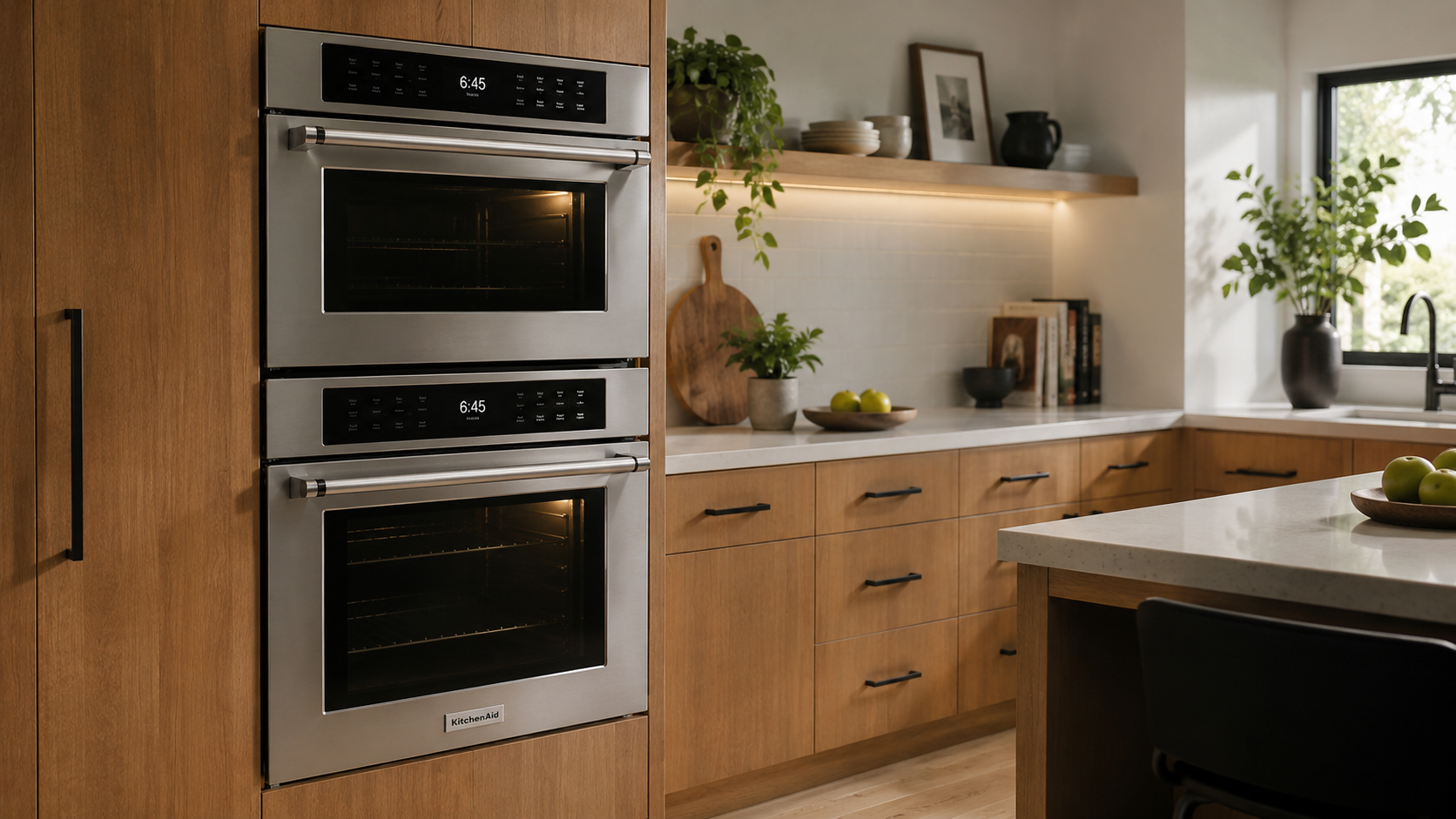
If you’re currently in the process of transforming your home or replacing an old range, odds are you’ve considered whether the double oven is truly worth the cost and space. It’s among the most heated improvements in modern kitchen design. A lot of homeowners are raving about it, while some are dissatisfied with the purchase in just one year.
This guide explains the benefits and drawbacks. It also explains how it compares to one oven and who exactly should (and should not) purchase one by 2026.
What Is a Double Oven?
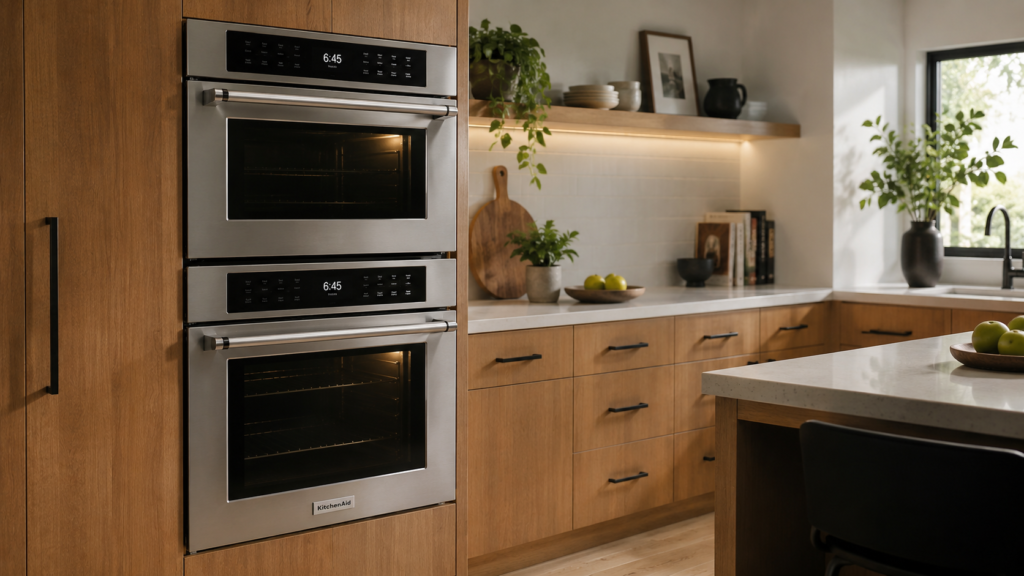
Double ovens are kitchen appliances that have two ovens placed over one another (or together in some model ranges) and come with separate temperature controls. This allows you to cook two meals at totally different temperatures, for instance roasting a whole turkey at 325degF and making cookies in 375°F simultaneously.
Double Oven Pros
- Cook several dishes at the same time_____ at different temperatures at different times, with no compromise.
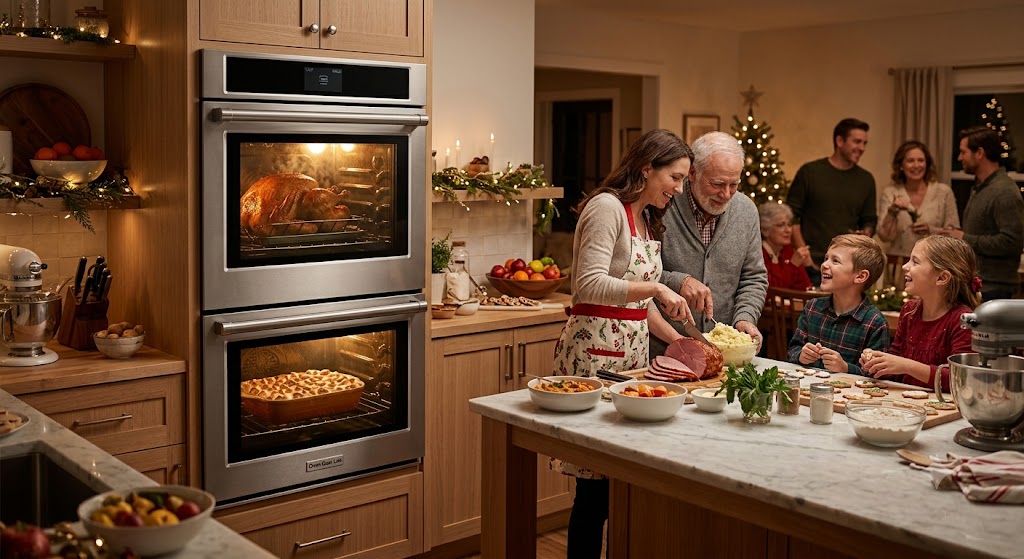
- Speedier holiday and family cooking _____There’s no waiting for a meal to be finished before beginning the next.
- A higher resale value _____This type of oven is sought-after in homes with a mid-to-high price point.
- Efficiency of energy in small-sized batches_____ The smaller upper cavity heats up more quickly and consumes less energy for small meals.
- A more reliable bake___ Some models have a convection chamber for delicate baked items.
- More capacity for hosting__ perfect for large family gatherings.
- Backup in the event ___that one oven malfunctions, so you’ll never be without an oven that works.
Double Oven Cons
- A higher upfront cost___ generally $4,000-$1,000 higher than a similar single oven.
- Extra kitchen space___ is not the best choice for small kitchens or apartments.
- Installation complexity___ is often a requirement for cabinetry modifications when retrofitting.
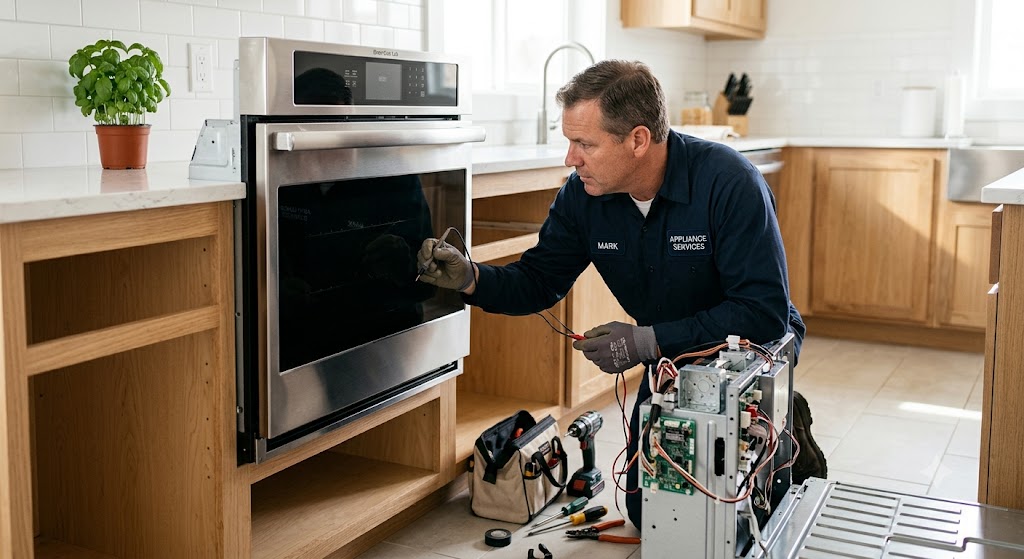
- More expensive repair costs ___two sets of igniters, heating elements, and control boards will result in higher repair costs. If you’ve had to deal with problems with your oven before, you’ll know that components and labor cost add up. Our guide to common issues with gas ovens and solutions provides similar repair methods which also apply to double ovens.
- Smaller individual cavity size___ the upper oven can be too small to fit large roasting pans or sheet trays.
- A higher energy usage for double-cooking___ that is full-size using two ovens simultaneously requires more power than a single oven.
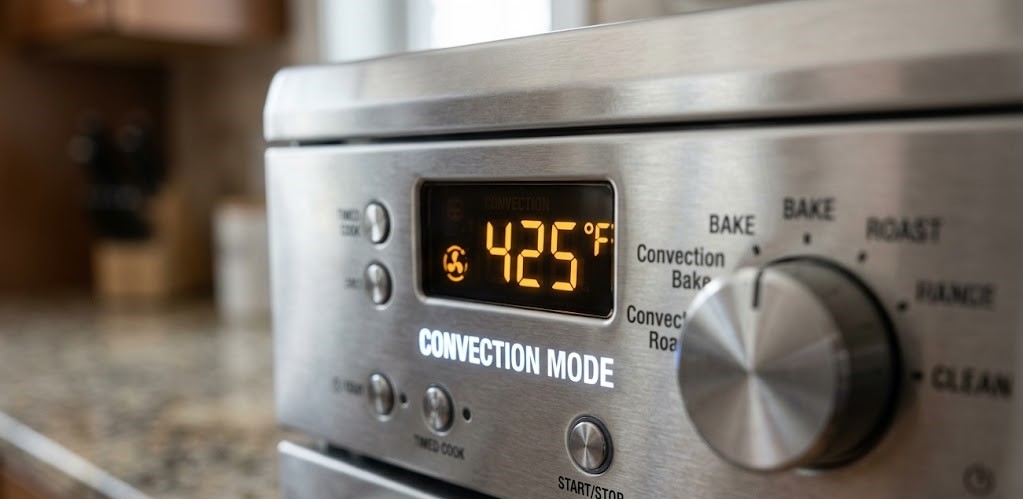
Double Oven vs Single Oven: Comparison Table
Feature Double Oven Single Oven
| Avg. Price Range | $2,000-$6,000+ | $800-$2,500 |
| Cavity Count | 2 independent | 1 |
| Cooking Capacity | Split, smaller per cavity | Full-size, single large cavity |
| Best For | Large families, frequent entertaining | Single cooks, small households |
| Installation | More complex, might require changes to the cabinet | Standard fit |
| Repair Cost | More (2 Sets of Parts) | Lower |
| Energy Utilization (full load) | Higher | Lower |
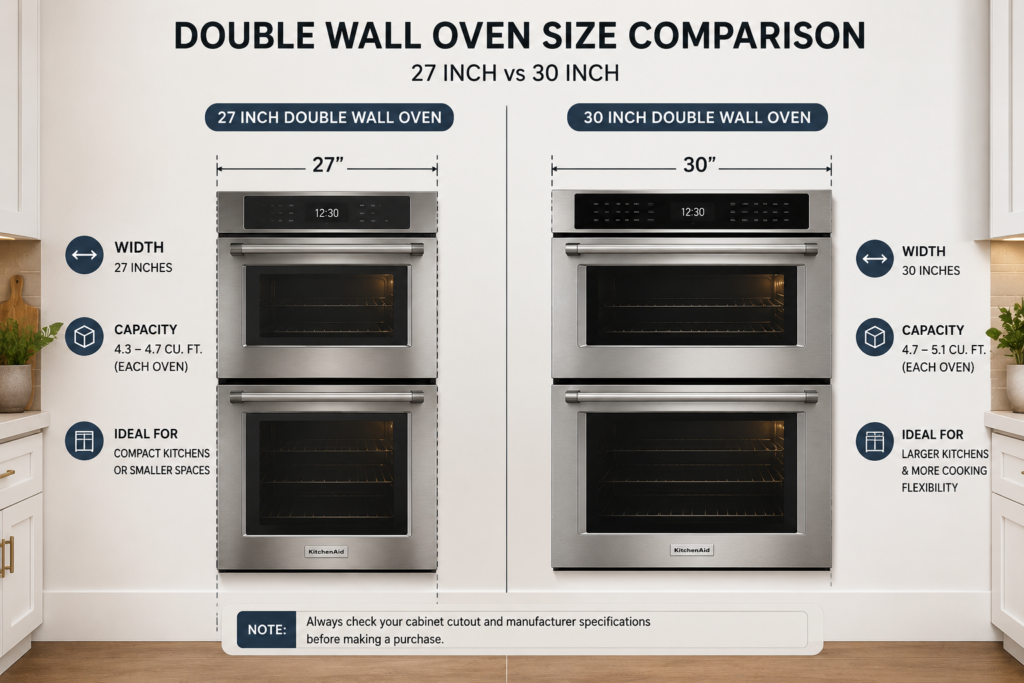
Types of Double Ovens
Not every this model is built the same way, and picking the wrong configuration for your kitchen layout is one of the most common regrets homeowners report after installation. Here’s a breakdown of the main types available.
1. Built-In Double Wall Oven
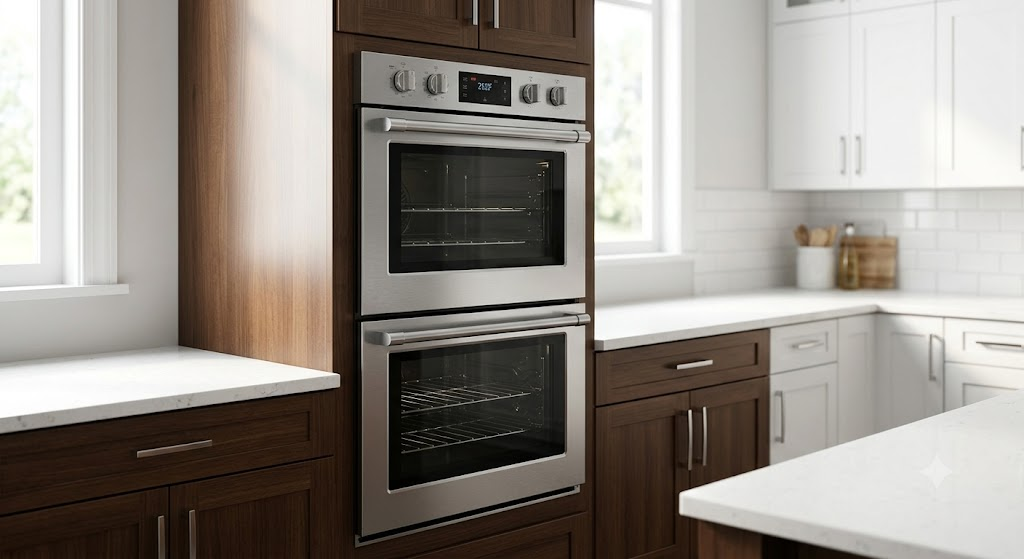
This is the most recognizable style — two separate oven cavities stacked vertically and installed directly into a cabinet wall, completely separate from the cooktop. Because the cooktop is installed elsewhere (usually as its own unit or as part of an island), this configuration gives the most design flexibility, letting you position the ovens at a comfortable eye level rather than bending down to a floor-level unit. It’s the most expensive category but also the one most associated with higher resale value in mid-to-upscale homes.
2. Freestanding Range with Double Oven
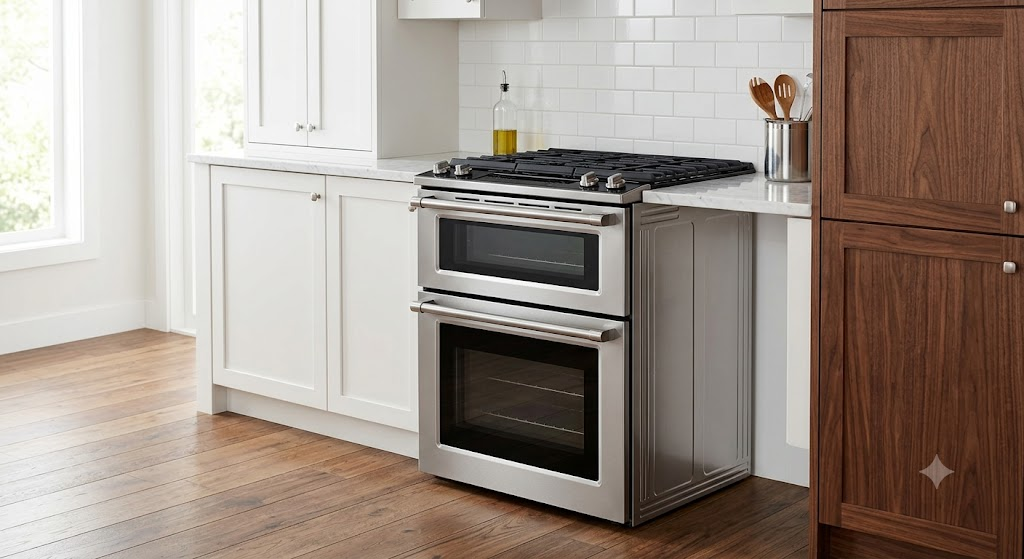
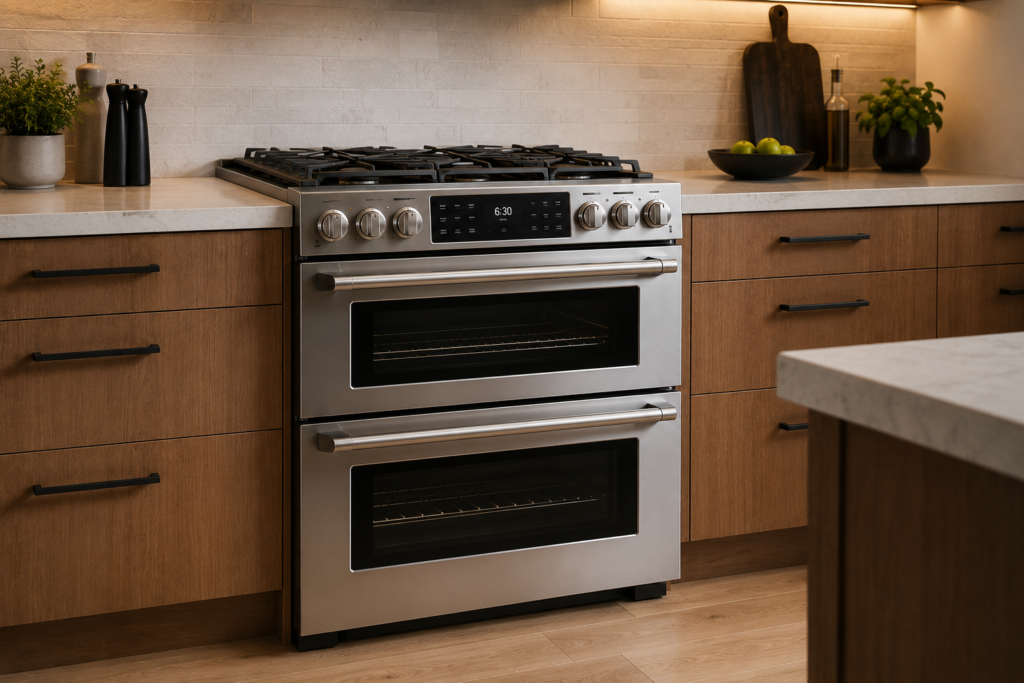
This style keeps the traditional range format — cooktop on top, ovens below — but splits the lower cavity into two independently controlled sections instead of one large one. It’s a more budget-friendly way to get double-oven functionality without a full kitchen remodel, since it slots into the same footprint as a standard range. The tradeoff is that both oven cavities sit lower to the ground, which some users find less convenient for lifting heavy dishes.
3. Slide-In Range with Double Oven
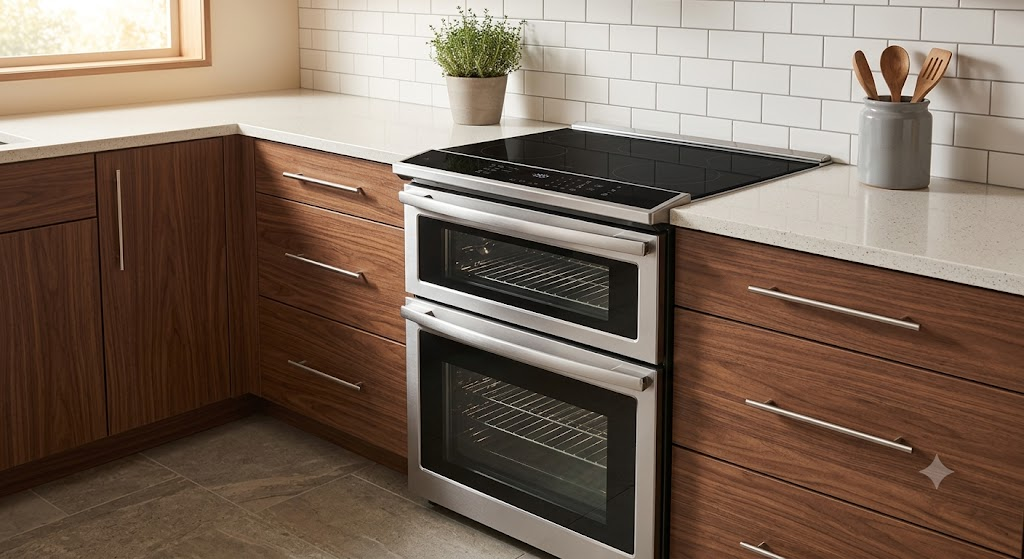
Similar to the freestanding range, but designed to sit flush with surrounding countertops for a more built-in look, without the exposed side panels of a freestanding unit. This is a popular middle-ground choice for people who want the aesthetic of a wall oven setup but don’t want to relocate the cooktop or invest in custom cabinetry.
4. Convection Double Oven
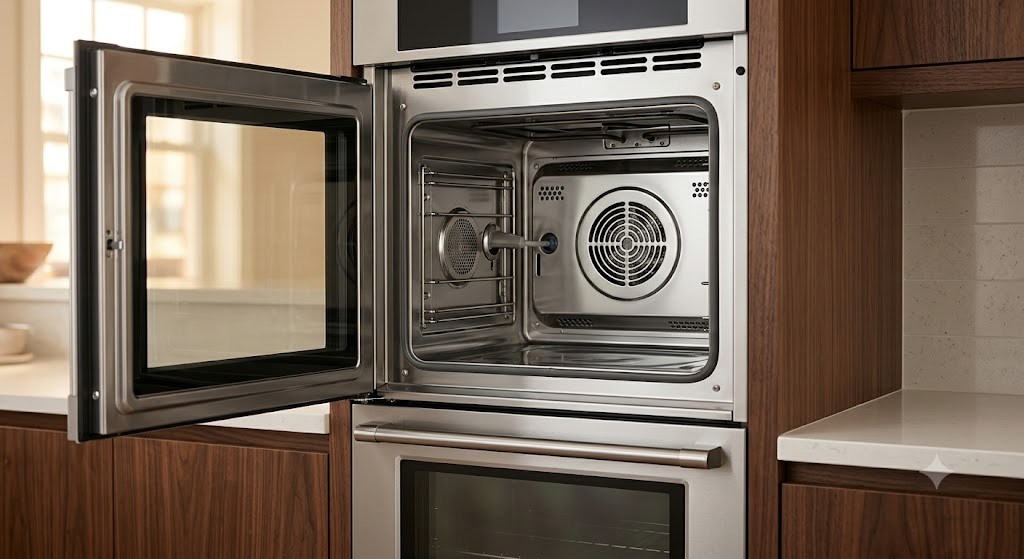
Many double oven models now include a convection fan in one or both cavities, circulating hot air for faster, more even cooking — particularly useful for baking. Some manufacturers offer convection in only the smaller upper cavity, reserving the larger lower cavity for standard bake and broil functions, which is worth checking carefully if even baking is a priority for you.
5. Steam-Assisted Double Oven
A newer and pricier category, these add a steam injection function to one cavity, useful for bread baking, reheating leftovers without drying them out, or roasting meats with better moisture retention. This type tends to sit at the top of the price range and is generally aimed at serious home bakers rather than everyday cooking.
6. Smart/Connected Double Oven
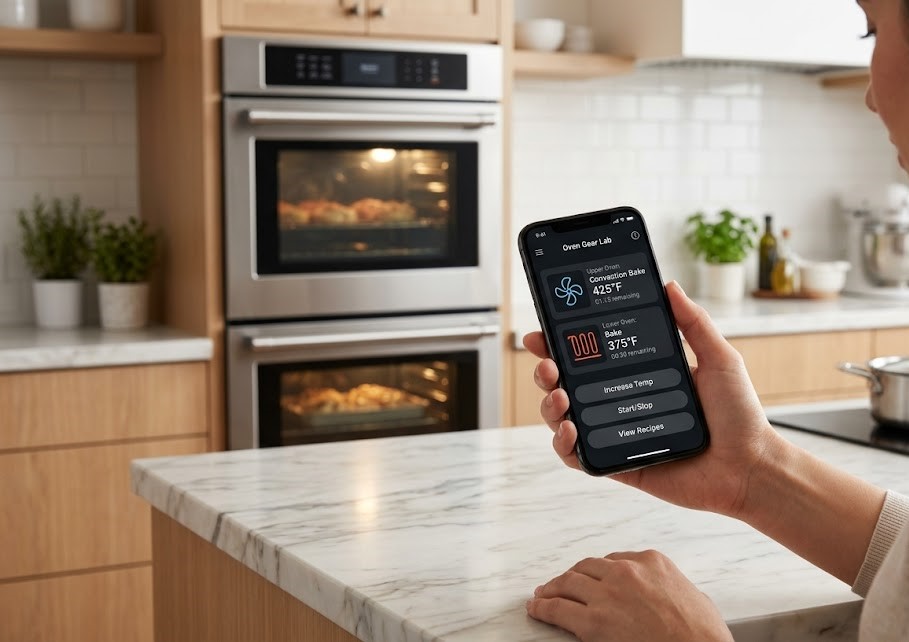
Most manufacturers now offer WiFi-enabled models with smartphone app control, remote preheating, and voice assistant compatibility. While convenient, these features typically add to both the upfront cost and potential repair complexity down the line, since the added electronics are one more component that can fail.
Which Type Should You Choose?
For most households renovating an existing kitchen, a slide-in range is often the easiest upgrade, since it avoids major cabinetry changes. For a full remodel or new build, a built-in wall unit tends to offer the best long-term layout and resale value. If baking is a bigger priority than everyday dinners, prioritizing convection — and possibly steam assist — matters more than the brand or smart features attached to it.
Whichever category you’re considering, it helps to physically stand in front of a floor model at an appliance showroom before buying, since cavity height and door-opening clearance vary more between models than spec sheets usually make clear.
A Few Widely Available Model Categories
Most major appliance manufacturers offer at least one option in each of the categories above, typically split across a “standard” tier and a premium tier with additional smart features and finishes. Standard tiers usually cover the essentials — two independently controlled cavities, basic convection, and a reasonably long warranty — while premium tiers add features like self-cleaning cycles for both cavities separately, faster preheat times, and integrated air fry settings. Mid-range models tend to offer the best balance of reliability and features for most households, while entry-level models may skip convection in one cavity to keep costs down.
Cost Breakdown by Type
Pricing varies significantly depending on which category you choose, and understanding where the money actually goes can help set realistic expectations before you start shopping.
1.Built-in wall units typically sit at the highest end of the price spectrum, often starting around $2,500 and climbing past $6,000 for premium finishes and smart features. Much of this cost comes from the installation itself rather than the appliance alone — cutting into cabinetry, ensuring proper electrical wiring for two independent heating systems, and sometimes hiring both an electrician and a carpenter if the existing cabinet opening doesn’t match standard sizing.
2. Freestanding and slide-in ranges tend to be more affordable, generally falling between $1,800 and $4,000, since they don’t require any cabinetry modification. The price difference between freestanding and slide-in models within this category is usually modest — a few hundred dollars — and mostly reflects the finished side panels and flush countertop fit that slide-in models offer.
3.Convection upgrades typically add $200 to $500 over a comparable non-convection model, depending on whether the manufacturer includes it in one cavity or both.
4.Steam-assist features carry the steepest premium, often adding $500 to $1,200 on top of a standard convection model, which is why this category remains a niche choice reserved mostly for serious home bakers rather than everyday households.
5.Smart/connected features add a more modest $150 to $400 typically, though repair costs for the added electronics can occasionally offset the convenience if something in the WiFi module or touchscreen fails outside of warranty.
It’s worth noting that installation costs alone — separate from the appliance price — can range from a few hundred dollars for a straightforward swap to well over $1,000 if cabinetry needs to be rebuilt or electrical service needs upgrading to support the additional load.
Maintenance Tips for Double Ovens
Because these units contain twice the moving parts of a standard single oven, a bit of routine upkeep goes a long way toward avoiding early repair visits.
1.Clean both cavities regularly, not just the one you use most. It’s common for households to favor one cavity — usually the larger lower one — and neglect the smaller upper cavity for months at a time. Built-up grease and food residue in an unused cavity can eventually affect heating element performance even if that cavity is rarely turned on.
2.Check door seals on both units periodically. A worn gasket on either cavity lets heat escape, forcing the unit to work harder and use more energy to maintain temperature. This is one of the most overlooked maintenance items, since a gap in the seal isn’t always visible without close inspection.
3.Avoid using the self-clean cycle too frequently. While convenient, the high heat generated during self-cleaning cycles puts extra strain on heating elements and igniters over time. Most manufacturers recommend running this cycle only a few times a year rather than after every use.
4.Keep the smaller cavity’s vents unobstructed. Because the upper cavity in most stacked configurations is more compact, its ventilation pathways are narrower and more prone to blockage from spills or food debris. A blocked vent can cause uneven cooking or trigger the unit’s safety shutoff.
5.Test both cavities periodically, even the one you rarely use. A cavity that sits idle for long stretches is more likely to develop issues that go unnoticed until the day you actually need it — during a holiday gathering, for example, when a backup oven suddenly won’t heat.
6.Schedule combined servicing when possible. If a technician needs to inspect or repair one cavity, it’s often worth having them check the second cavity’s components at the same time, since the diagnostic and disassembly steps overlap significantly between the two units, potentially saving on a future separate service call.
Following these basic habits won’t eliminate the possibility of repairs entirely, but it does meaningfully reduce how often either cavity needs professional attention — helping the higher upfront investment in a double oven pay off over a longer working lifespan.
Beyond routine cleaning and inspection, it’s also worth keeping a simple log of when each cavity was last serviced, especially if the two sides tend to be used unevenly. A quick note on your phone or a sticky pad inside a cabinet drawer — noting the date of the last deep clean, any unusual smells or sounds, and whether both racks are sitting level — can make it much easier to describe symptoms accurately if you ever do need to call someone out.
Technicians often ask how long a symptom has been present, and vague answers like “a while” make diagnosis slower and sometimes costlier, since more time may need to be spent testing components that turn out to be unrelated to the actual problem. A few minutes of tracking now can shave real time off a future visit, and it also helps you notice small changes early, before they turn into a bigger, more expensive repair.
Is a Double Oven Worth It in 2026?
Consumer Reports states that double ovens are the ideal way for families to save time and money when cooking large meals or hosting parties at various temperatures, or baking frequently at various temperatures. If you have a family of three to four people who don’t often entertain, an entire oven equipped with a convection setting is the most sensible choice.
The most important question doesn’t have to be “is a double oven good?” It’s “do your cooking volume and lifestyle justify the extra cost and space?” In the event that you have Thanksgiving dinner each year, or bake professionally at your home, the answer is nearly always yes.
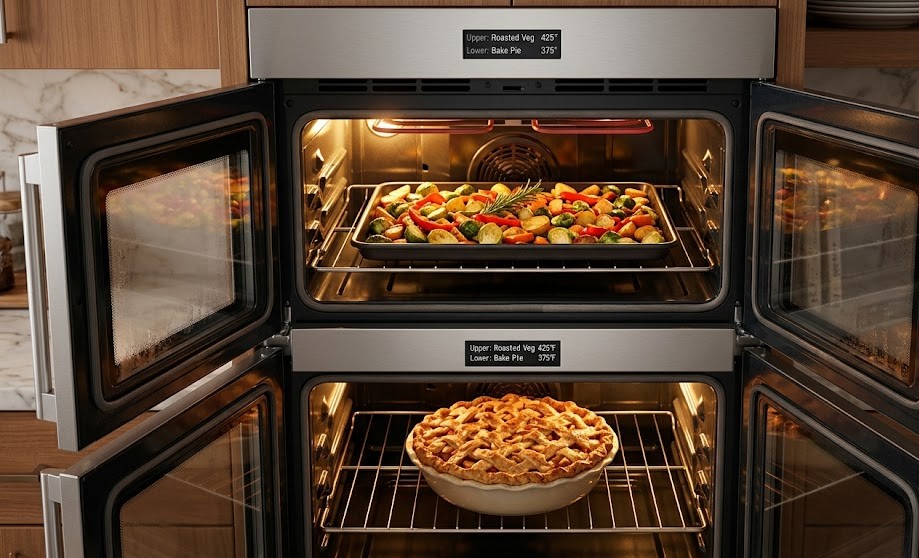
How to Choose the Right Double Oven
- Find the size of your cavity based on your cooking routine • Check for the dimensions of the upper cavity for baking sheets or large pans.
- Search for convection that is independent in at most one cavity.
- Check for smart features, including WiFi, Preheat, and remotely monitored temp, which are standard for the 2026 model.
- Make sure the cabinet is compatible before buying an oven that comes with a double wall. You should be aware of the terms of the warranty. Double ovens have more elements, and a long warranty is essential.
Frequently Asked Questions
Do you believe a double oven will justify its costs? For those who are frequent cooks and families with large numbers, it is true that the capability to cook two meals with different temperatures will make cooking time much more efficient. For those who are not heavy users, the single oven is a better value.
1.Do double ovens require more energy?
Only when both cavities are operating simultaneously does the use of just one oven use approximately the same amount of energy as an oven of this size.
2.Could I replace the single oven with a double oven?
Yes, but it usually requires modification to cabinetry because double ovens are larger. A professional or installer must first confirm the area.
3.Are double ovens more difficult to fix?
Since the ovens have two different sets of igniters, heating elements, and control boards, repairs and the complexity of repair tend to be higher than one oven.
4.What size of kitchen will I require to have an oven with two burners?
The majority of double wall ovens need at minimum 24-30 inches cabinet width as well as a depth that is sufficient to allow for ventilation. Therefore, smaller kitchens may be unable to fit an oven comfortably.
CONCLUSION
The double oven isn’t a universal upgrade. It’s an option that is based on what you’re actually cooking. In the event that you plan to host big parties and bake frequently or cook several food items with different temperatures regularly, it’s worth the cost and space can pay back in convenience and versatility. If your kitchen is used for daily cooking that is only for just one or two persons, a well-equipped single oven can serve you as well at only a fraction of the cost and the risk of repair.
Before making a decision, take measurements of the space in your cabinets and compare your budget against the $1,000 to $4000+ cost gap. Consider the frequency you’ll actually utilize both ovens at the same time. This is the test that really matters not only whether the double oven sounds appealing however, it’s also a matter of the way your kitchen will fully utilize it.