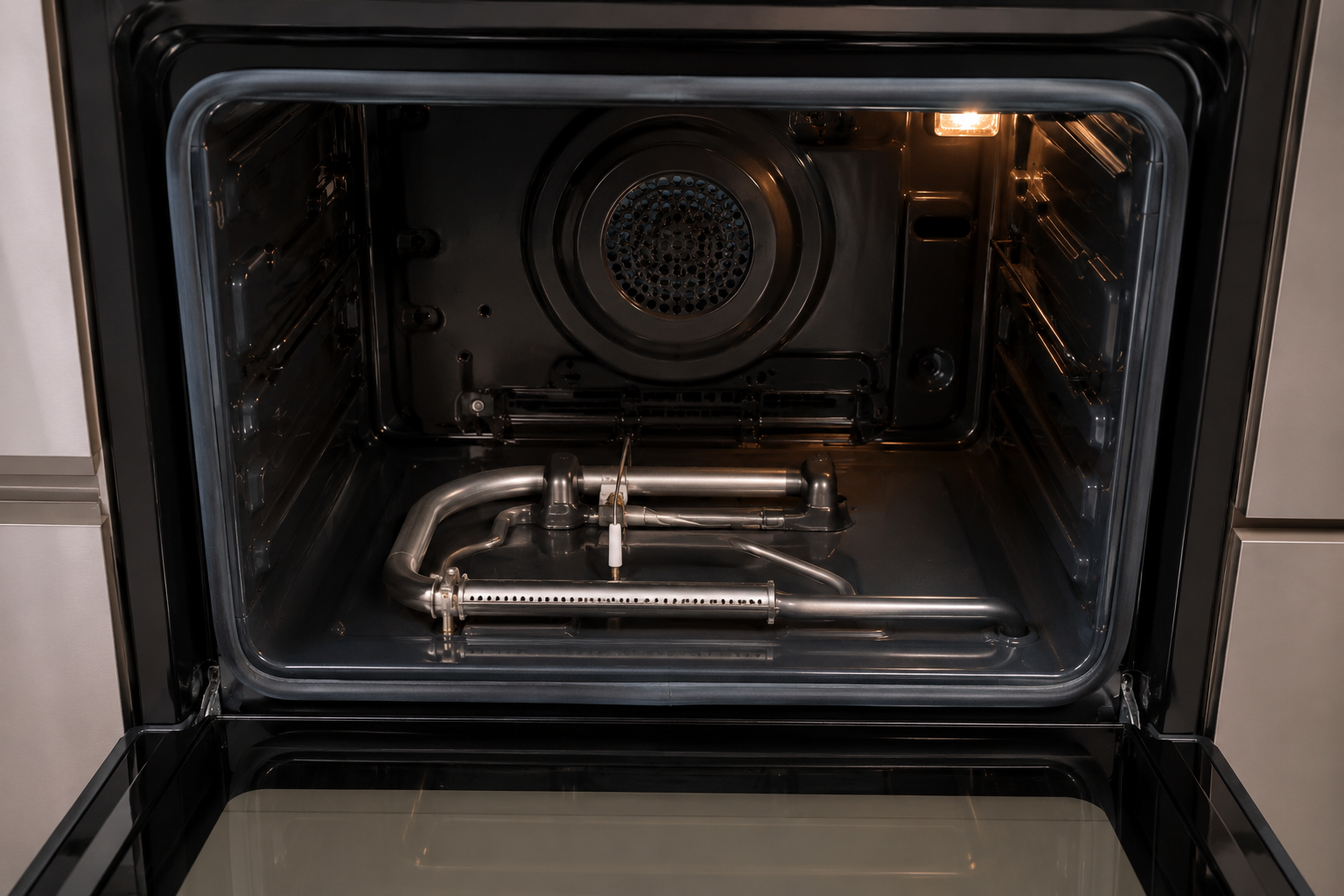
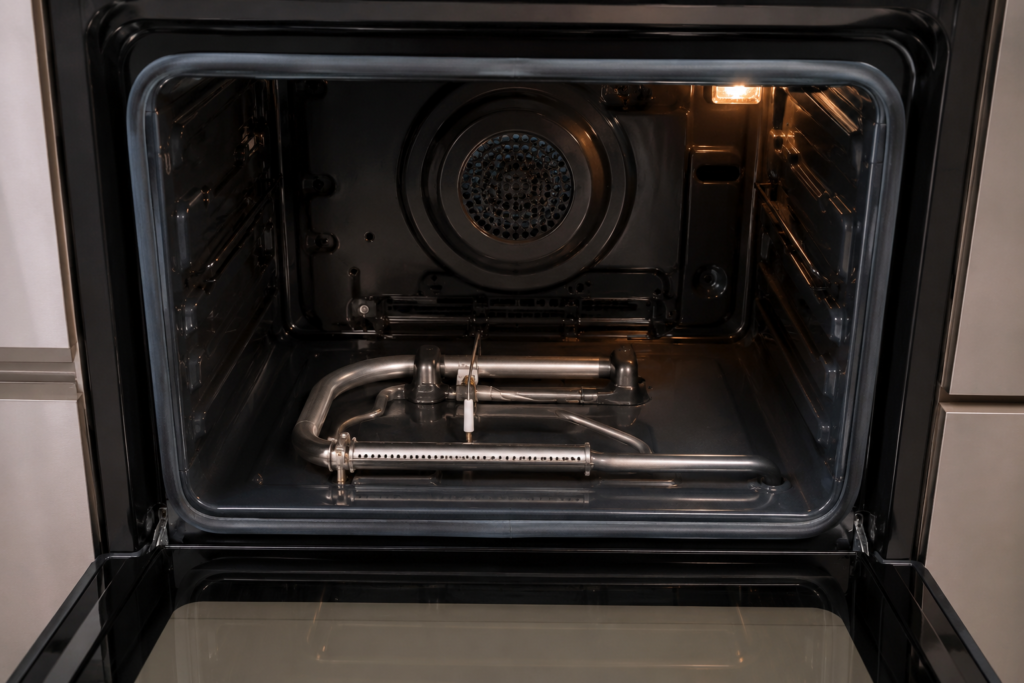
Knowing how to fix a gas oven starts with understanding one thing: in the vast majority of cases, the culprit is a small, inexpensive part — usually the igniter — rather than anything wrong with your gas line or the oven itself. This guide explains what happens within the oven when it’s not working, how to determine it in a safe manner, and how to tell when the issue is a step beyond “quick DIY fix” into “call a licensed technician.”
How to Fix a Gas Oven: Understanding Why It Stops Heating
Modern gas ovens do not use an open flame anymore and instead make use of an electronic igniter. When you switch on the oven, the igniter starts to heat up, then glows until it becomes hot enough to cause the alarm valve, which is gas safe, to turn off. Gas is flowing, the igniter turns on, and it cooks.
This one sentence can explain almost every issue that you’ll come across. If any link in the chain is weak — worn igniter, filthy burner, blocked valve, or a damaged sensor– the oven won’t turn on or heat up properly or maintain the temperature in a constant manner.
Older ovens function differently. They have standing pilot lights and a tiny safety device known as a thermocouple. It ensures that gas flow is only maintained until it senses the pilot flame has been ignited. If you own the older versions, the majority of your issues will focus on the thermocouple and not the igniter which changes how you’d approach trying to fix a gas oven built before electronic ignition existed.”
Quick Glossary
- Igniter: It is the electronic part that heats up and lights the gas burners in modern ovens.
- Thermocouple: A safety device in older pilot-light ovens that ensures gas flow only when the pilot light is on.
- Safety valve for gas. It opens to allow gas into the burner; however, only when the ignition device (or pilot) shows it is fully operational.
- Sensor for temperature: The probe is a thin one in the oven cavity that gives the control board the current temperature of the oven.
Before You Touch Anything: Safety Basics
Gas appliances incorporate gas and electrical components; therefore, a few guidelines apply regardless of the issue you’re trying to solve a few guidelines apply before you attempt to fix a gas oven yourself.
- If you notice a gas smell -it’s a strong sulfur-like smell- switch off the stove, do not turn off any lights, or ventilate the area, and then call your gas company immediately— see the US Fire Administration’s gas safety guidance for more.
- Be sure that your oven is disconnected from the power source or shut off your circuit breaker before passing through every door.
- Let the oven completely cool before inspecting contents of the oven cavity. Thermocouples, ignition sensors, and door seals are typically safe to replace. Regulators, gas valves, and gas lines aren’t -leave that to a qualified technician.
Problem 1: Oven Won’t Ignite at All
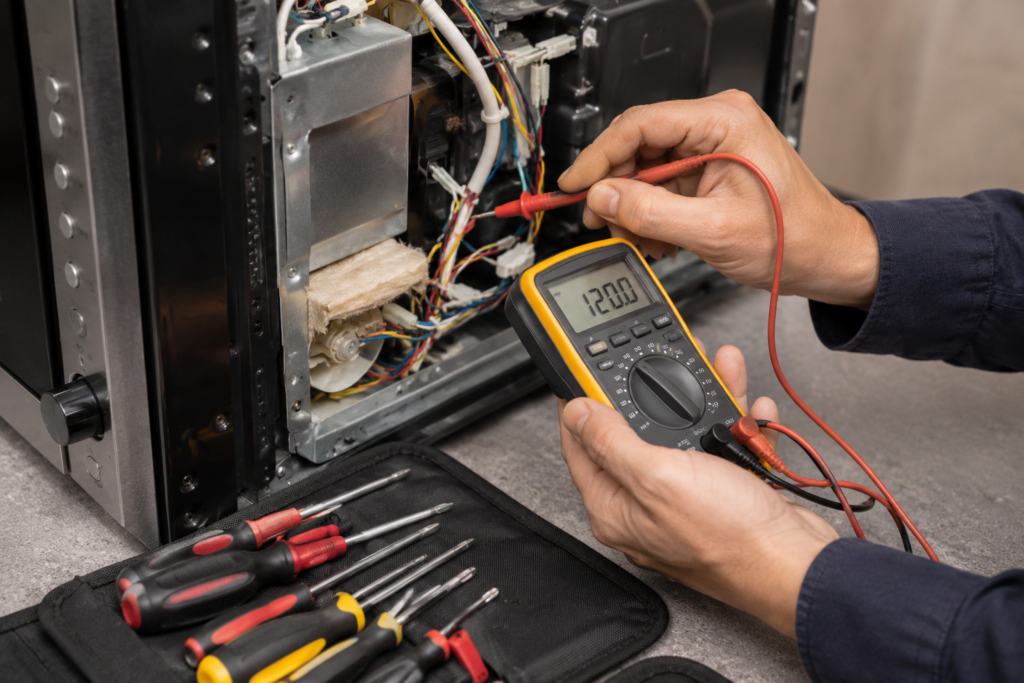
If the oven is not doing anything whatsoever — no click or smell, and or even a single attempt to light the reason is usually related to gas, rather than electrical, because ignition is controlled electronically. This is one of the most common reasons people search for how to fix a gas oven that won’t start at all.
Perform these checks in a sequence:
- Check that the oven is powered (check the internal light or the clock display).
- Look over your breaker panel to find a tripped circuit.
- Check the igniter for cracks that appear or discoloration. Also, look for carbon buildup.
- Check the ignition with an instrument such as a multimeter. An igniter that is healthy typically has a reading somewhere in its resistance range. An open or endless reading means it’s dead.
An igniter that fails is typically simple to replace with two screws for mounting, as well as a wire harness disconnection, and a new component that is compatible with the model number of your oven.
Problem 2: Igniter Glows, But Gas Never Lights
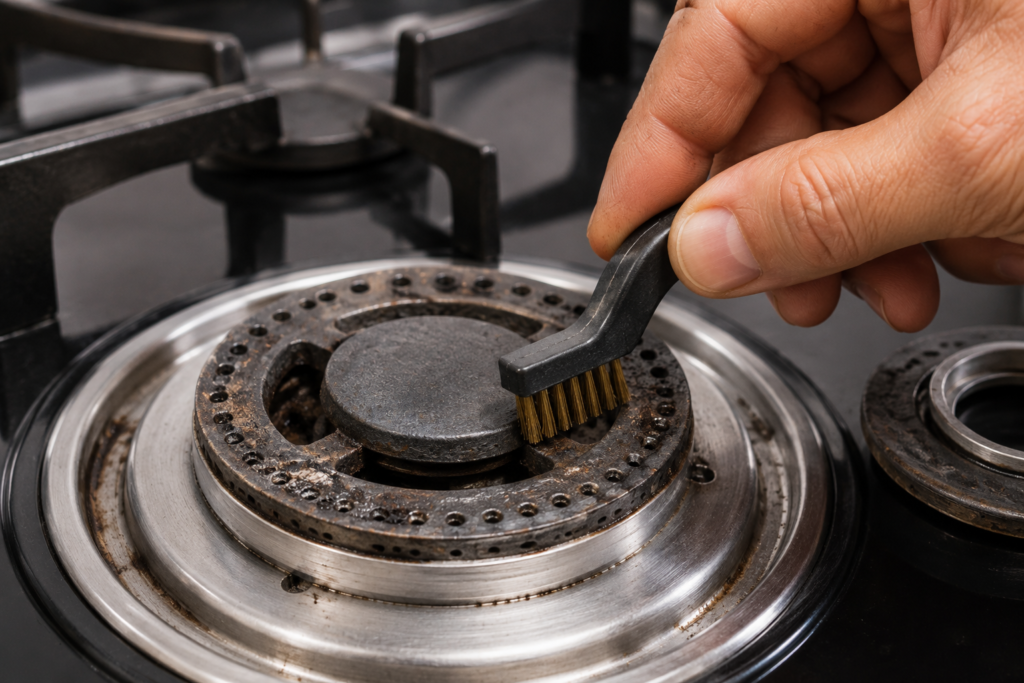
Sometimes, you may observe the flame glowing or hear it chirping, but there isn’t any flame. There are two possible explanations for this.
- First, the ports for burning can be blocked with food particles or grease that block gas flow, even though the igniter is performing its job. A gentle brush or needle is usually able to remove this.
- The second, and the last, is a bit of a shocker: an igniter could glow visually but be insufficient for it to generate enough voltage to trigger the safety valve for gas. The fact that it appears to be “working” doesn’t mean it is electrically adequate. When cleaning your burner does not fix the problem, the igniter needs to be replaced. These are the two most common reasons you may need to fix a gas oven that lights inconsistently.
Problem 3: Clicking Sound, But No Ignition
A constant clicking sound is an attempt by the igniter to ignite — this is normal. However, the issue is the time you hear it clicking and clicking, but without ever generating any flame.
- The reason for this is usually the spark electrode being too far away from the burner, water near the ignition device after an accident, or even a poor igniter. It’s also important to note that many ovens have an inbuilt safety lockout feature. When ignition doesn’t work within 90 seconds, the control panel ceases to attempt the ignition instead of letting gas accumulate. If this happens, switch off the oven completely and then try to restart it once instead of letting it run constantly. If you’re trying to fix a gas oven that heats unevenly, checking the sensor position is always the first step.
Problem 4: Oven Ignites, But Won’t Reach Temperature
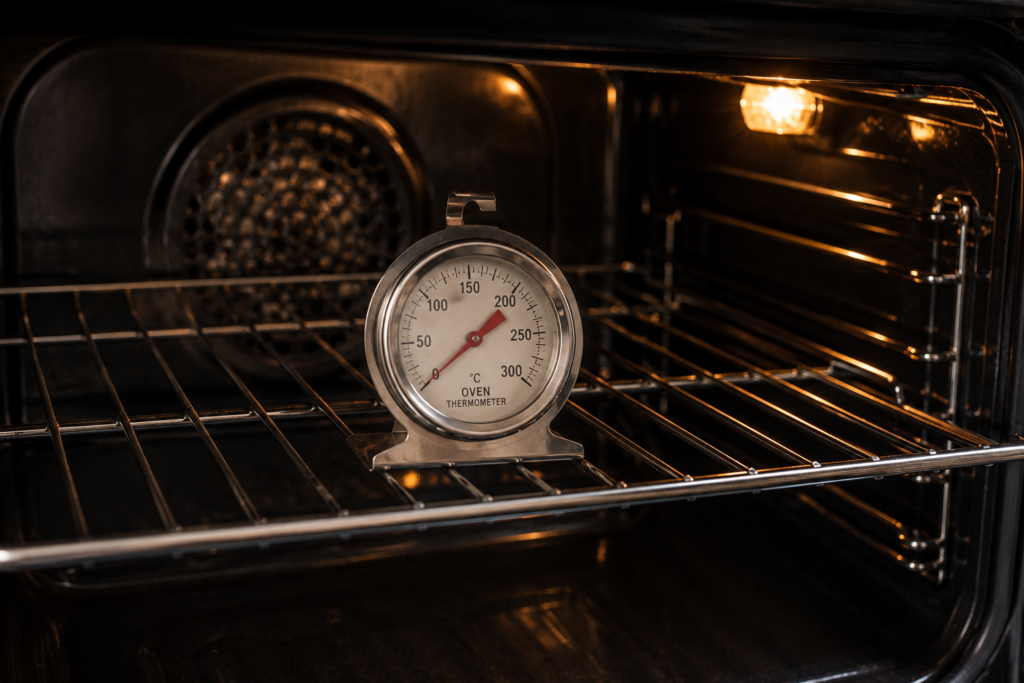
- If the oven is lit but food takes a significant amount of time to cook, or if an independent oven thermometer displays huge gaps from the temperature set, the thermostat is the best thing to investigate.
- It’s a thin probe made of metal inside the cavity. It’s very easy to be pushed around during cooking or cleaning until it’s rubbing against the wall inside — which can cause it to lose the reading completely. Bend it gently back to an upright position, and then retest.
- If repositioning does not help, try placing an oven thermometer in the middle rack, and run the oven through a couple of different temperatures, then check the temperature readings. An even gap across all temperatures is usually a sign of the sensor being out of calibration and not an issue with the thermostat. A key distinction to make when you try to fix a gas oven that won’t reach temperature.
Problem 5: Uneven Cooking or Hot Spots
- Uneven browning is usually due to airflow, not ignition. A warped rack, blockage in the vent, or even the sensor’s location relative to the burner may create cool and hot zones within an oven.
- Turning pans around halfway through cooking can be a viable option to ensure that the racks are level and make sure that nothing — foil, spills, or drippings– is blocking internal vents and helps fix a gas oven with uneven cooking without replacing any parts.”
Problem 6: Pilot Light Keeps Going Out (Older Models)
- When your stove is operating with an open flame in place of an electronic ignition the pilot that’s not lit almost all the time indicates the thermocouple.Clean the thermocouple’s tip using fine sandpaper. Also, ensure that the pilot flame is surrounded by it, rather than simply brushing over it. Thermocouples cost little, and replacing one is a DIY task that can be done in the event that cleaning does not solve the issue, often all it takes to fix a gas oven with a pilot light that won’t stay lit.
Problem 7: Bake Works But Broil Doesn’t (or the Reverse)
- It’s confusing to people as it is perceived to be a greater failing than it actually is. The majority of gas ovens have two igniters that are completely distinct -one is dedicated to the bake burner, and another to the broiler burner.
- If one cooking method works perfectly while the other does not, it’s a strong indication that you have a gas line and a control panel that is in good condition. It’s the igniter that is connected to the malfunctioning mode. Replace the individual igniter, instead of thinking there’s a bigger problem. This is usually all it takes to fix a gas oven with a bake-broil mismatch.
Problem 8: Gas Smell When the Oven Is Off
- An odor of gas with the oven off completely is a distinct type of issue. This usually suggests a problem with the line or gas valve in the first place.
- There’s nothing you can do yourself in this case, other than cutting off the gas source and contacting your utility or a certified technician immediately. This is not a step you take to fix a gas oven yourself.
Problem 9: Oven Door Won’t Seal
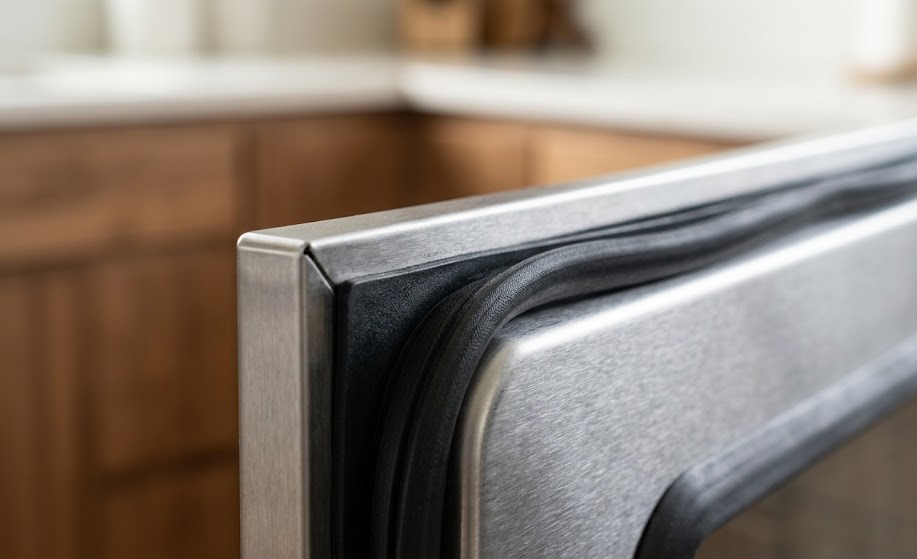
- If you observe that heat escapes through the door that is closed or cook times have gone up without explanation, look at the rubber gasket which runs along the door’s frame to look for holes, tears or flattening.
- Replacing a gasket that is damaged is usually a screw-and-clip job however, it’s often neglected because it does not hinder the oven’s performance or affect its efficiency a low-cost way to fix a gas oven that isn’t sealing properly.
DIY Vs. Calling a Technician
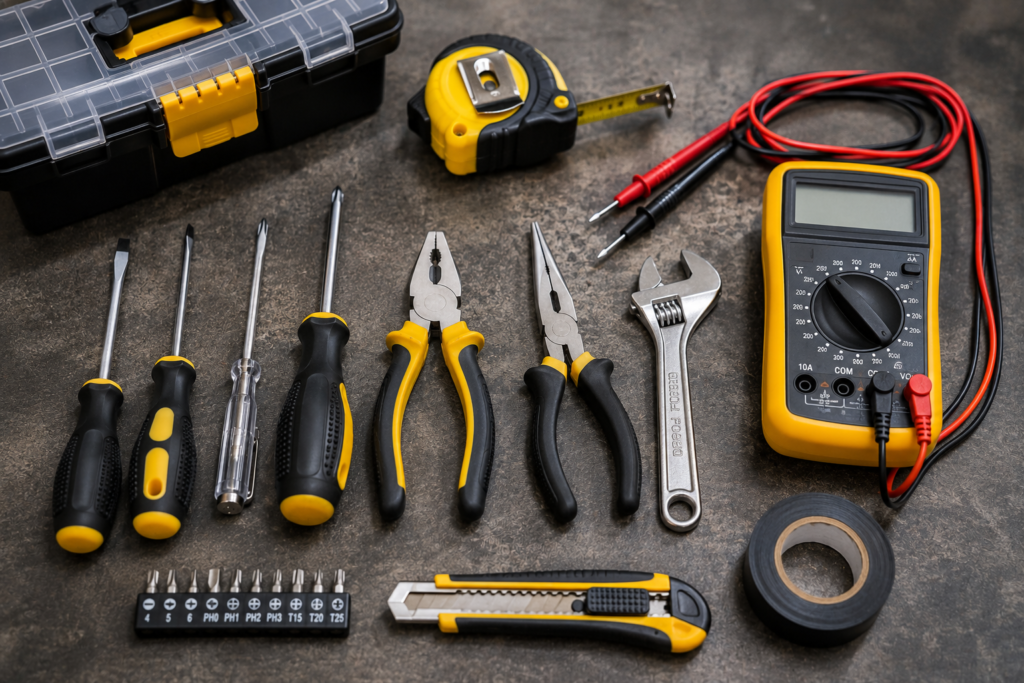
Whether you should fix a gas oven yourself or call a professional usually comes down to which component has failed central to learning how to fix a gas oven the right way.
Situation DIY-Friendly? Typical Cost
| Igniter replacement | Yes | About $40-$60 for the component and the part alone. $150-$325 for professional help. |
| Thermocouple replacement | Yes | Low-cost part; no labor costs when hired |
| Sensor for temperature | Yes, that is true if you have basic multimeter skills. | Part cost moderate |
| Door gasket | Yes | Simple, low-cost job |
| Safety valve for gas | No, only professionals. | Costs are higher due to safety regulations. |
| A gas smell | No, it’s a technical or utility company only. | N/A — safety concern, not a repair decision |
A general guideline is for ovens over 10 years old, and the cost of repair is about half of the price for an entirely new oven. It’s worth considering the cost of repair versus the cost of opting to fix it.A little routine care goes a long way toward helping you avoid needing to fix a gas oven again anytime soon rather than trying to fix a gas oven that’s simply reached the end of its useful life.
Common Mistakes Worth Avoiding
The assumption is that the smell of gas will go away on its own — there’s no guarantee, so it’s not a case of waiting and seeing.
- Checking an igniter’s performance while it’s connected or running.
- Purchasing a replacement item without verifying your version number before you do so.
- It is a habit of cycling the oven over its lockout window to unlock the ignition instead of waiting to try to do it again.
- The thermostat is the culprit for the temperature issues, with an unplaced sensor being the most common reason.Deciding whether to fix a gas oven or replace it entirely depends mostly on the oven’s age and repair history.
When to Stop Troubleshooting and Call a Professional
DIY repairs are a good idea for sensors, igniters, gaskets, thermocouples -the entire electrical, risk-free components with documented solutions. Regulators, gas valves, and gas lines belong to completely different systems, and any gas odor must be discarded immediately with an authorized technician or the emergency line never attempt to fix a gas oven yourself in that situation.
FAQs
1.Why is my gas oven firing but not lighting?
Usually, the spark electrode is placed too far away from the ignition source, or the igniter may be insufficient to draw enough electricity to trigger the valve that protects the gas. It’s not a sign of danger. It isn’t a risk; however, it can mean ignition isn’t complete. If you’re trying to fix a gas oven that clicks but won’t light, start by checking the burner ports and igniter.
2.What can I tell about the condition of my oven’s igniter?
Test it with an instrument after disconnecting the oven. A healthy igniter will read within the range of its intended resistance, and an open or infinity reading suggests it’s time to replace it.
3.Can I repair an oven that is gas by on my own?
Yes, electrical components such as thermocouples, igniters sensor seals for doors and igniters.A certified technician should address line or gas valve issues….DIY-friendly ways to fix a gas oven yourself.
4.What’s the cause of why my oven emits the smell of gas after it’s turned off?
It is usually an issue with the valve or line and not something that is ignition-related or an issue with your ignition device. This needs immediate attention by a trained professional, not DIY troubleshooting.
5.What does it usually cost to fix a gas oven?
Most people can fix a gas oven themselves for well under the cost of a service call, especially when the issue is an igniter or sensor. Igniter parts alone typically cost between $40 and $60 price range. In contrast, a full professional repair that includes labor typically costs between $150 and $325 dependent on the part and the region in which you live.
6.Why is my ovenn’t getting to the temperature I’ve specified?
The majority of the time, the reason is the temperature sensor having changed or moved, rather than an unreliable thermostat…the fastest way to fix a gas oven’s temperature problems.
7.Why can my oven bake perfectly, but it doesn’t broil (or the reverse)?
Most gas ovens run bake and/or broil using two separate igniters. These points specifically point to which igniter is responsible for the mode that’s not working….making it easy to fix a gas oven with a bake/broil issue.
8.How long will igniters for gas ovens endure?
Most recently, the last several years, when used in a normal manner, but the frequent use of self-cleaning cycles or grease buildup could reduce the lifespan..so regular cleaning helps you avoid needing to fix a gas oven’s ignition system too often.”
Conclusion
The majority of gas oven issues result from one of the few parts, such as the igniter, the temperature sensor, or, in old versions, the thermocouple. Each one is a well-documented, reasonably priced solution. The only thing you should not make by yourself is anything that involves the gas valve or a gas odor. This is where DIY ends, and a certified technician will take over. Learning how to fix a gas oven yourself can save you a service call in most of these cases. With the right part identified, most people can fix a gas oven in well under an hour…which is why most people can fix a gas oven without special tools or training.
For more on oven types, check out our Sicilian Oven Guide.